
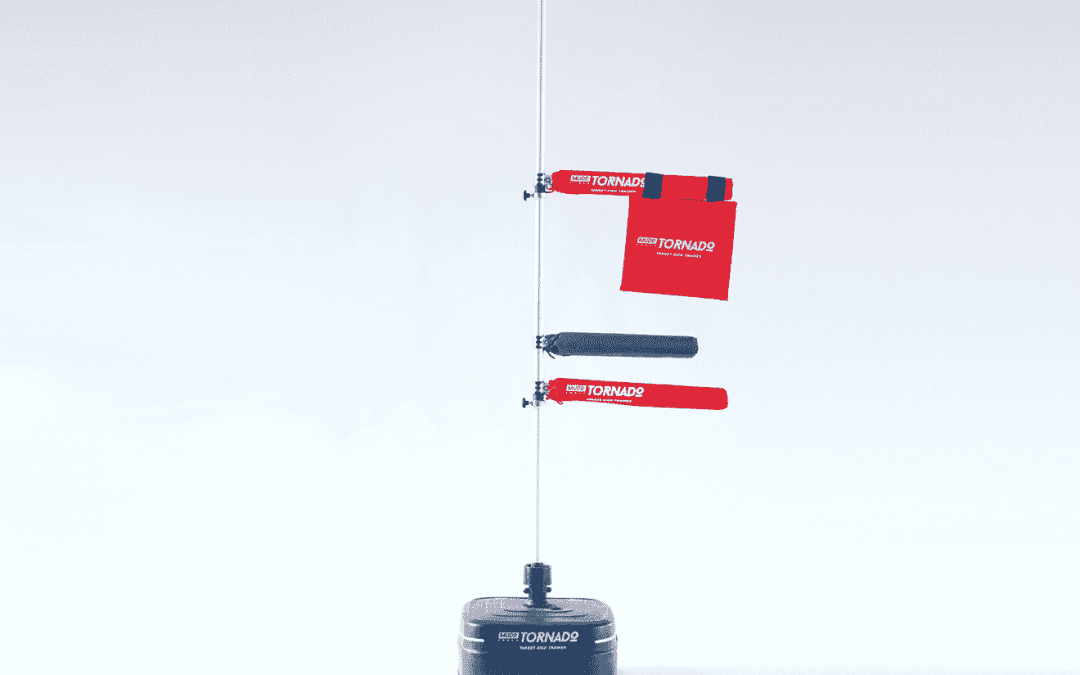
Anyone working on kicks at home quickly notices where traditional equipment reaches its limits. A punching bag absorbs a lot of energy, a pad usually requires a partner, and free kicking without a clear target only improves timing to a limited extent. This is precisely why many are looking for a kick trainer for home in a test – not just any gadget, but a training device that truly improves technique, control, and repeatability.
The crucial question isn't just whether you can kick it. The real question is: Does the device support clean movements, realistic timing, and measurable progress? If technology makes a difference, a home trainer must do more than just be a hitting surface.
Home Kick Trainer Review – What Really Matters
A good at-home kick trainer needs to solve three things simultaneously: it must take up little space, it must enable precise technique training, and it must be useful without a training partner. Many products only manage one of these.
Cheap kick pads with handles or simple target pads seem practical at first glance. In training, however, what makes progress often becomes lacking: defined feedback upon impact, a clean movement rhythm, and a structure that allows for more than just dull repetition. The problem is particularly evident with roundhouse kicks, side kicks, or fast double kicks. Those who merely kick "somewhere" quickly train strength, but not automatically precision.
Therefore, processing shouldn't be the only thing that counts in testing. More important is how realistically the device reproduces movements. Can a technique be executed smoothly without constant readjustment? Does the target remain stable enough for controlled hits? Does the system quickly return to its starting position? That's precisely where toys are separated from training solutions.
The most important home testing criteria
1. Technique over brute force
Many buyers first focus on stability. That's correct, but not enough. An extremely hard or rigid target can lead to kicks sounding loud but being technically sloppy. For Taekwondo, kickboxing, or karate, it's not just the impact surface that's crucial, but hitting cleanly at the right angle.
A good kicking coach supports technique. They don't force the athlete into unnatural distances and don't completely forgive crude errors. That's a subtle difference. Too lenient is bad, too blunt is also bad.
2. Reserve and Rhythm
Those who train alone at home need a training flow. If the target swings for a long time after each hit or has to be manually realigned, the rhythm breaks immediately. This costs repetitions and thus quality.
This is why the reset mechanism in testing is a central criterion. Systems with rotating elements or rapid reset are clearly at an advantage in technical training. They allow for sequences, side changes, and reaction drills, instead of having to set up each individual action anew. When every hundredth of a second counts, that is precisely what is crucial.
3. Precision and Aim
An exercise bike should not only allow hits, but also demand them. This is achieved through the size of the target, its positioning, and the feedback upon contact. Areas that are too large make it too easy. Areas that are too small frustrate beginners. Good systems find a balance or can be adjusted.
Especially for teenagers and adults who want to kick faster and cleaner with precision, the feeling upon impact is extremely important. You immediately feel whether a device makes technical errors visible or conceals them.
4. Space Requirements and Installation
The best kick trainer is of little use if it's not practical in the apartment. For home use, dimensions, assembly time, noise level, and storage are important. A device that needs to be permanently installed or moves around the room with every kick is out for many for that very reason.
It's worth taking an honest look at everyday life here. Do you train in the basement, in your home gym, or in the kids' room? Do you have neighbors below you? Do you want to train for five minutes or do full workouts? Therefore, a good test not only evaluates training performance but also usability in real life.
What classic solutions can – and can't do
The heavy bag remains a strong tool for toughness, conditioning, and combinations. It's useful for certain goals. However, those who want to specifically train timing, distance, and precise kicking mechanics will quickly reach their limits at home. The bag swings back, absorbs the impact, and provides limited feedback on hit quality.
Pads are strong in technical training, but usually only really effective with a partner. The biggest advantage is lost when training alone: variable input and immediate reaction. Freestanding dummies, on the other hand, look spectacular, but require a lot of space and aren't always ideal for fast sequences or controlled repetitions.
This is precisely where modern kick trainers come in. They aren't intended to replace everything, but rather as a targeted solution for a problem: effective kick training at home, even without a partner. This is a distinction that many tests treat too superficially.
Kick trainers for home use review – which types are convincing?
The best design depends on the training goal. Those who primarily want to train strength and load will lean towards heavier striking faces. Those who wish to improve technique, speed, and repeatability need a system with clear objectives and quick responses.
Rotatable kick pads are particularly interesting for dynamic techniques because they support the flow of movement. Instead of working against resistance bluntly, the athlete trains a cleanly executed kick with better timing. This may seem less spectacular than a maximally powerful strike at first, but it often brings more for competition and technical quality.
It becomes even more exciting when feedback becomes measurable. Sensor-based systems or solutions with clearly recognizable reactions to speed and accuracy create something that is often missing in home training: objective control. You don't just feel like you're training better, you see progress. That's exactly what motivates in the long run.
This is a real advantage for ambitious athletes and coaches, because technical training becomes more effective when it consists not just of repetition, but of repetition with feedback.
Who is a modern kick trainer really worth it for?
Beginners benefit most from guidance. A clear goal helps eliminate uncertainty from the movement and build a solid foundation. It’s important that the equipment isn’t too challenging and allows for enough room for error without rewarding sloppy form.
Advanced players need more. They want to set up combinations faster, execute side changes cleanly, read the distance better, and stay stable under pressure. This is precisely where simple home equipment separates from performance-oriented solutions.
Competitive athletes and coaches also pay attention to measurability. How consistent is the execution? How quickly does the target return? How smoothly can sets be trained? For this target group, a kick trainer is strong if it not only motivates but also makes technical work more precise.
A device like Mudotools' training solutions is particularly suitable where classic equipment becomes too static. When control starts with technique, rotating target surfaces, defined reset, and measurable speed are not child's play, but a training advantage.
Common mistakes when buying
The most common mistake is to decide based on price alone. Inexpensive equipment seems attractive, but it often quickly becomes uninteresting because it doesn't create a real training flow. Then the trainer sits in the corner after a few weeks.
The second mistake is only thinking about hardness. Harder isn't automatically better. Those working on kicks at home primarily need repeatability, precision, and a realistic target feel.
The third mistake is using the wrong benchmark. Many people compare home training equipment with club training and expect identical conditions. That's unrealistic. A good home soccer trainer isn't meant to replace everything. It's meant to bridge the gap when there's no partner available, limited space, and you still want to practice technique cleanly.
How to Read a Kicktrainer Test Correctly
Pay attention to whether the test actually discusses training or just lists data. Information about materials, dimensions, and weight is helpful but says little about practical use. It only gets interesting with questions like: Can a clean kick series be trained with it? Does the target return fast enough? Does the movement remain fluid? Is the equipment still motivating after many repetitions?
Good tests also talk about limitations. A compact device might be ideal for timing and technique, but not the first choice for maximum power. A large freestanding device offers a lot of presence, but requires space and is often less flexible. This balancing act is precisely what makes a meaningful test.
Those who train seriously at home shouldn't buy based on the loudest promises, but on the training benefits. Progress is made where the equipment allows for the right kind of repetition.
In the end, it doesn't matter if a kick trainer looks spectacular. What matters is whether you train more often, cleaner, and with more focus with it. If your equipment improves timing, sharpens technique, and gives you clear feedback even without a partner, home training becomes more than just busywork. Then it becomes work on real performance.