Kick training equipment – train better than with a punching bag

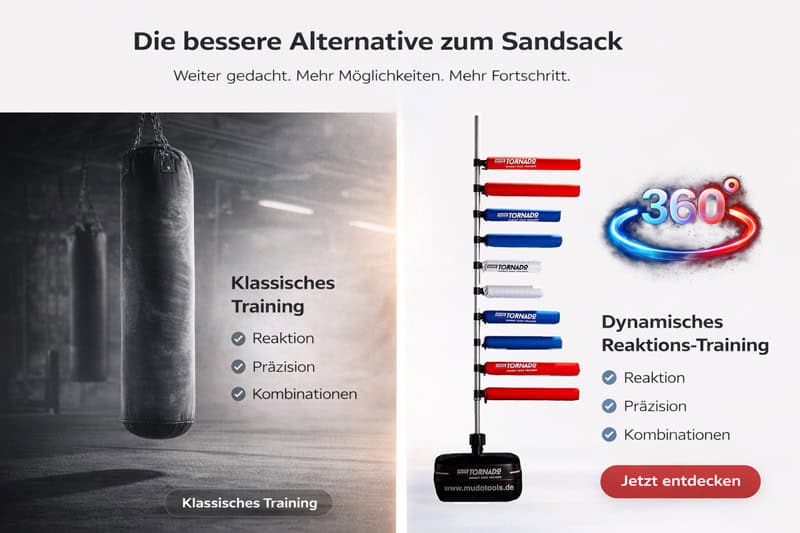
Better training than with a punching bag – more precise, faster, and more realistic

Better training than with a punching bag – more precise, faster, and more realistic


Train your kicks like in real sparring

Why traditional training equipment is often not enough

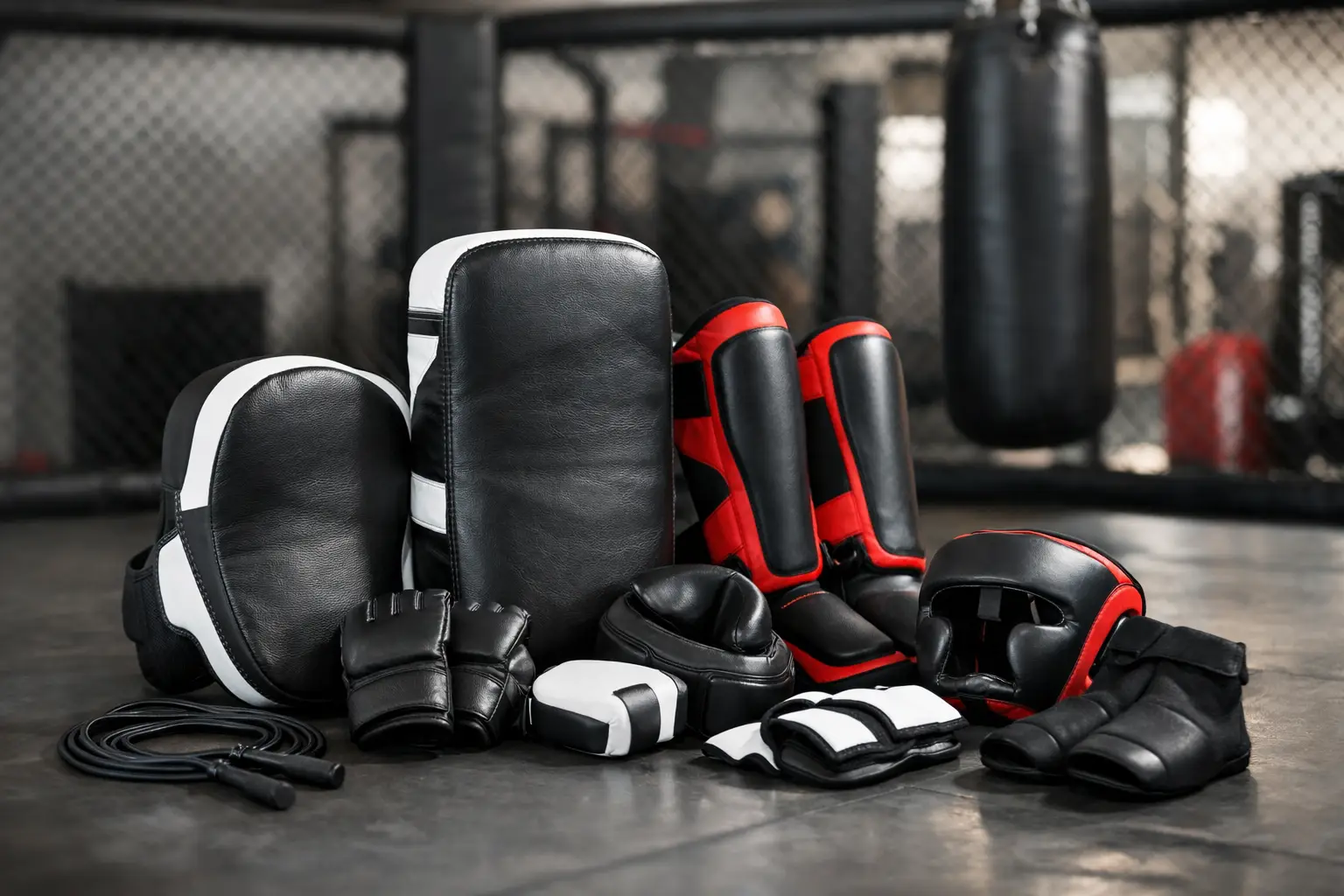
The punching bag is one of the most well-known training tools in martial arts. It is well-suited for training strength and basic techniques.

But this is precisely where the limit lies: the sandbag hardly moves and provides no real feedback. This means the dynamic, which is crucial in actual combat, is missing.

Those who only train statically develop strength, but often not real responsiveness or precision.

Improve Taekwondo Kicks

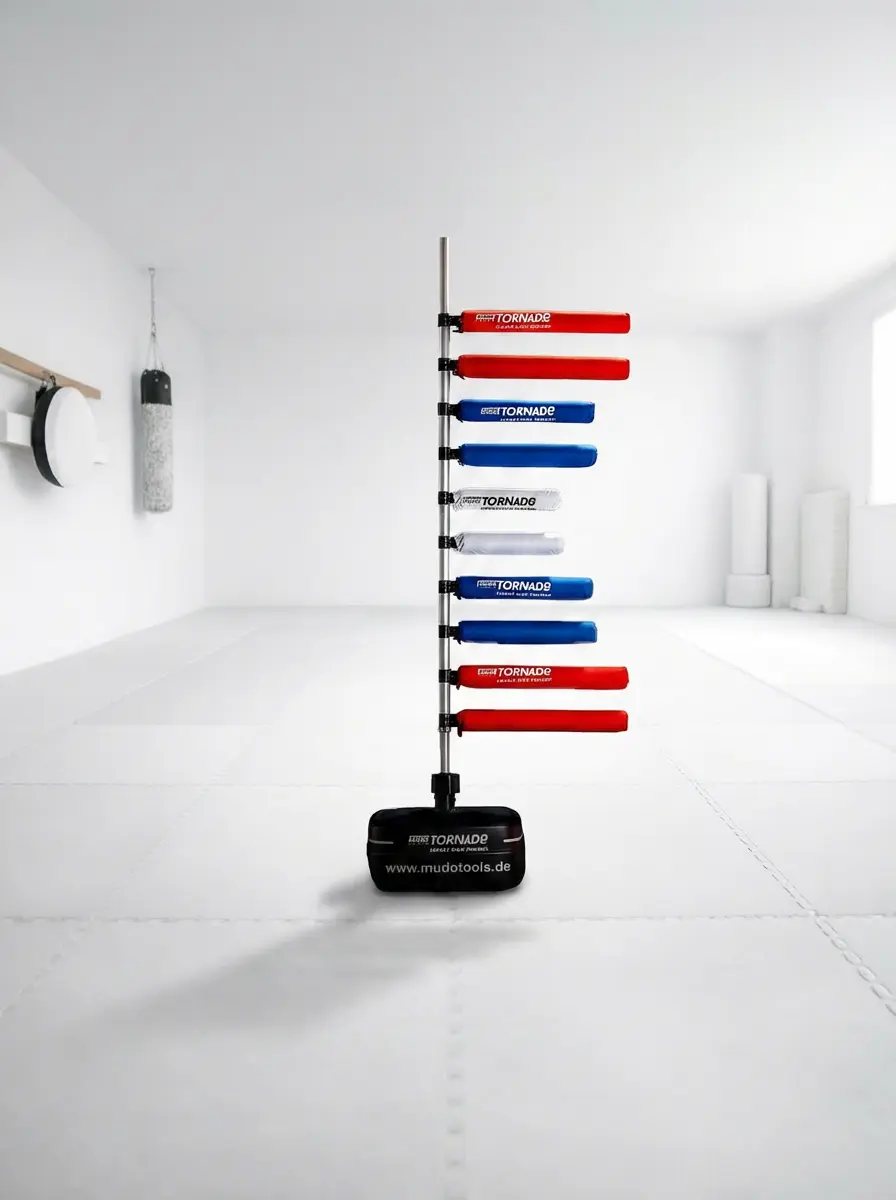
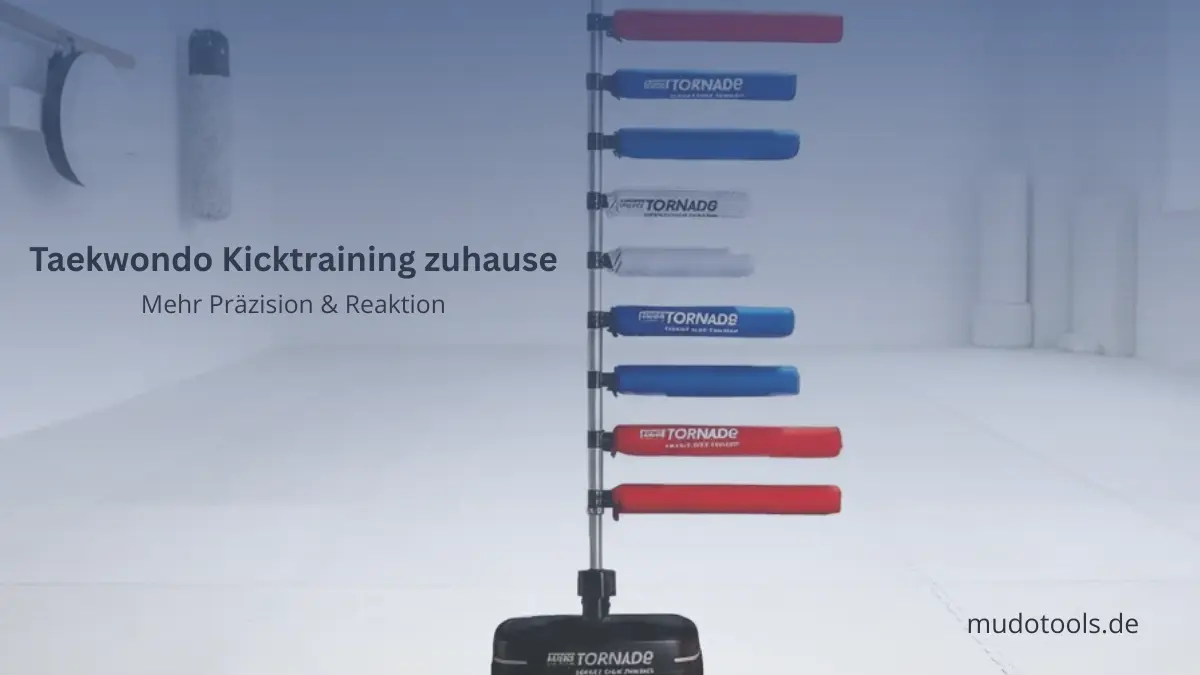
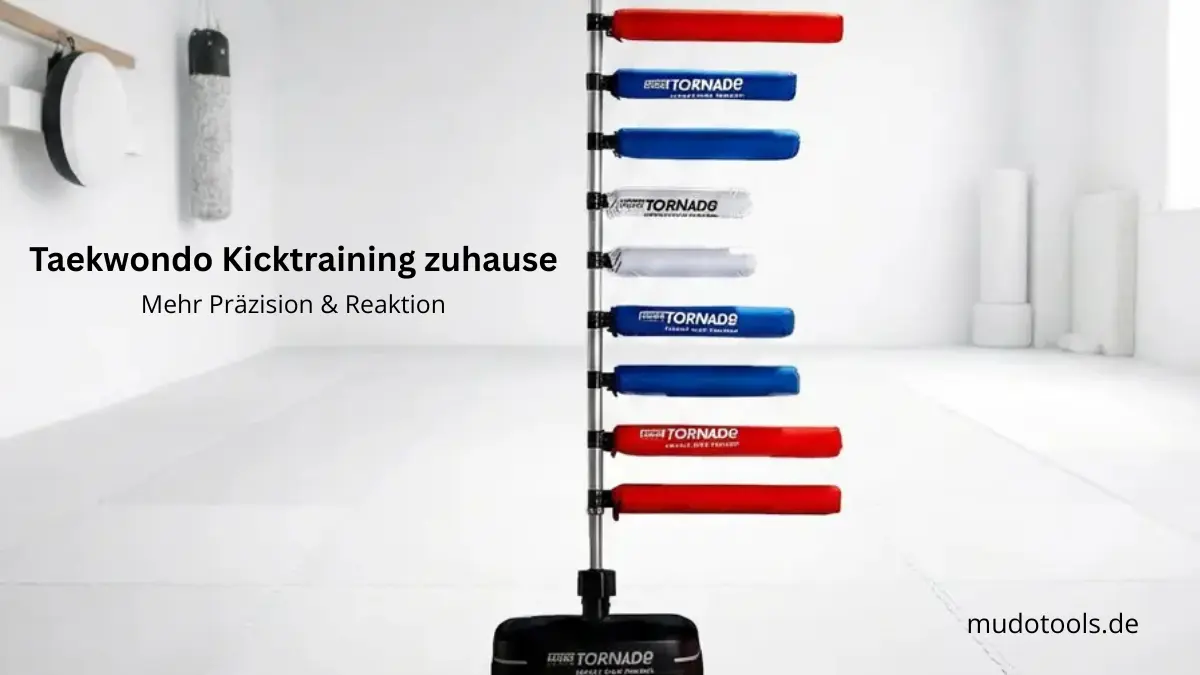
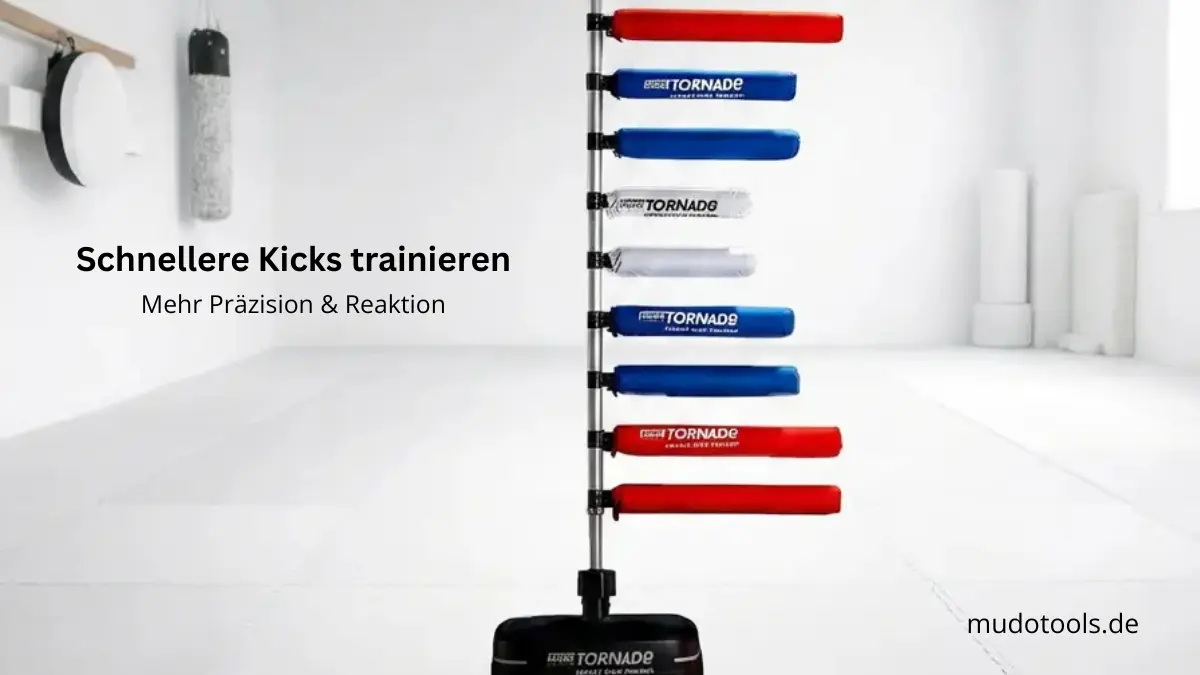
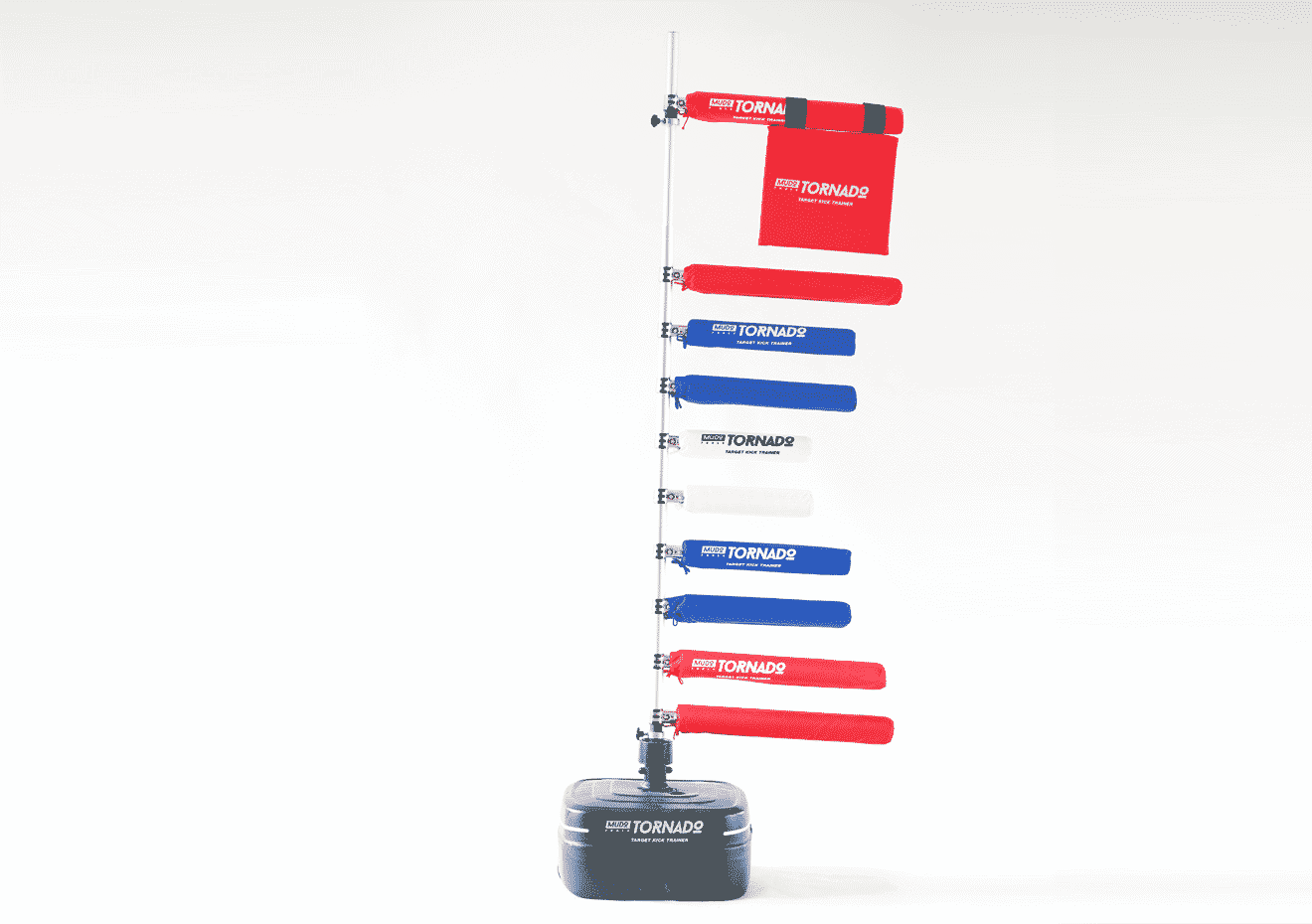
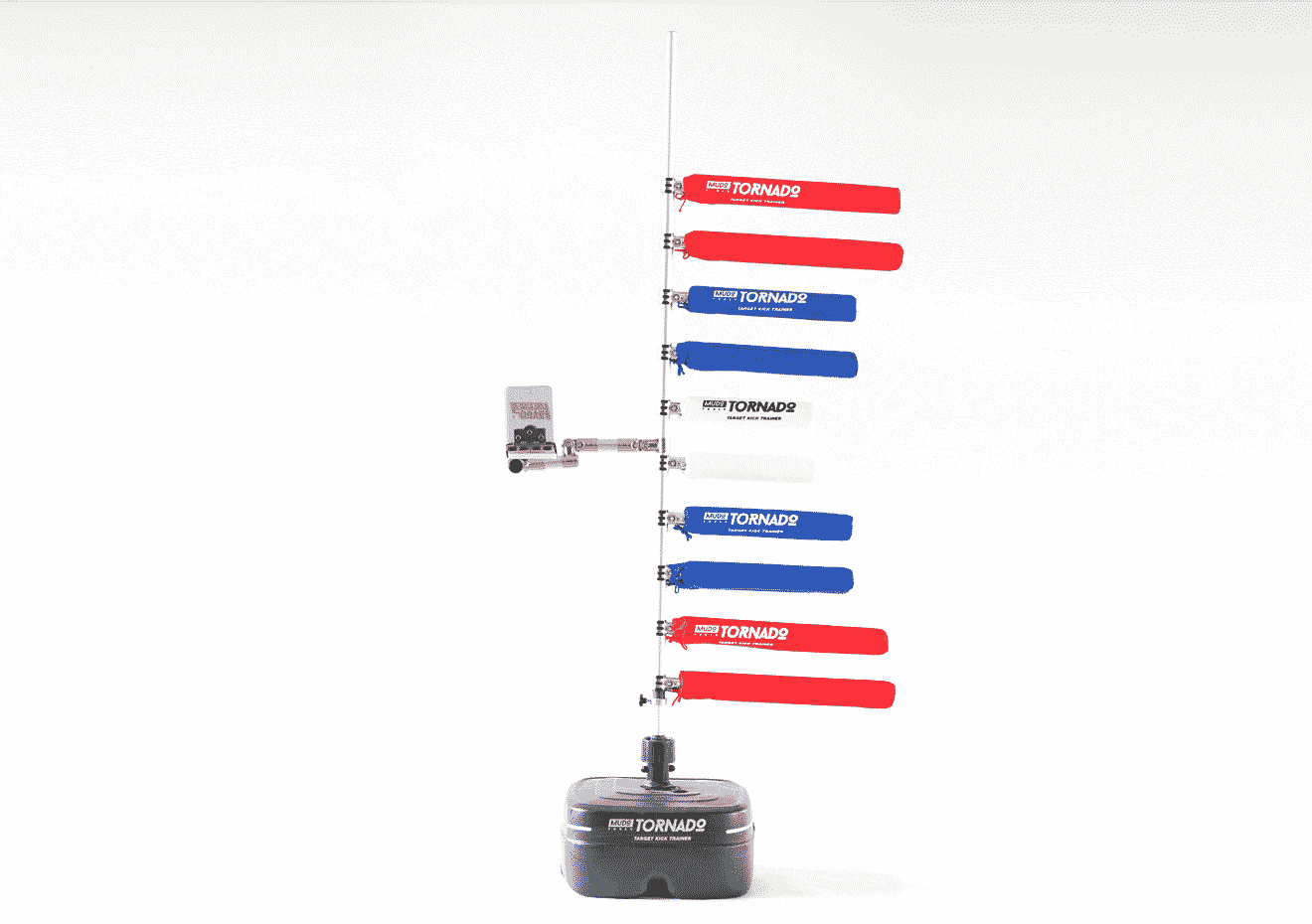
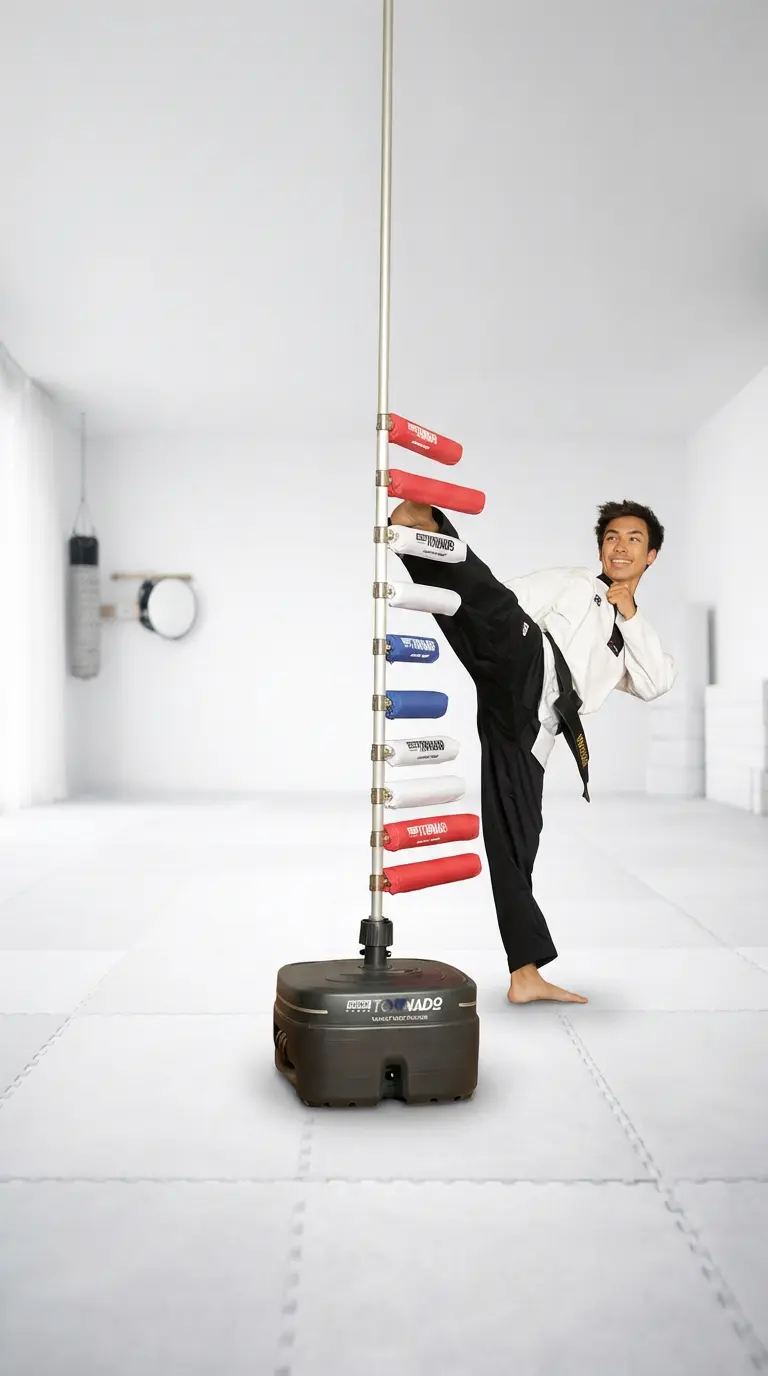
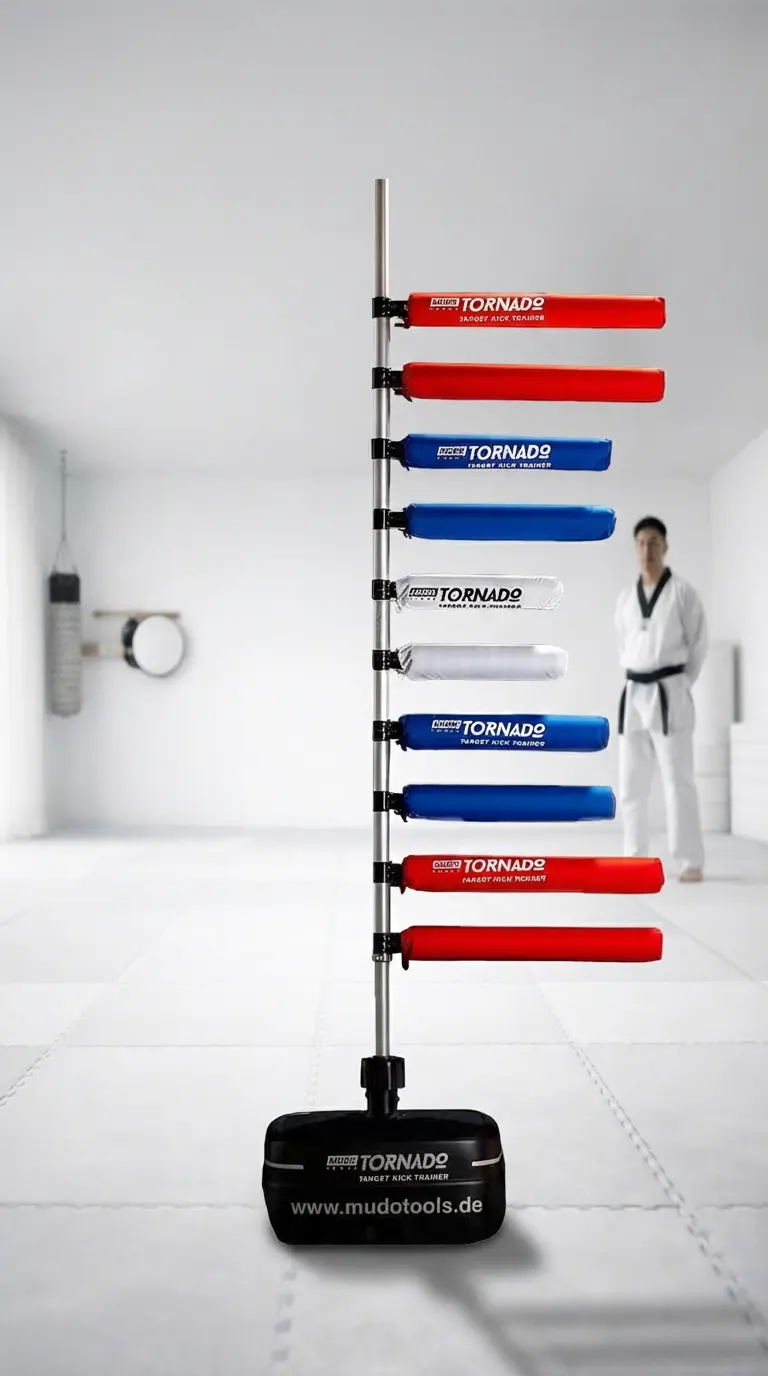
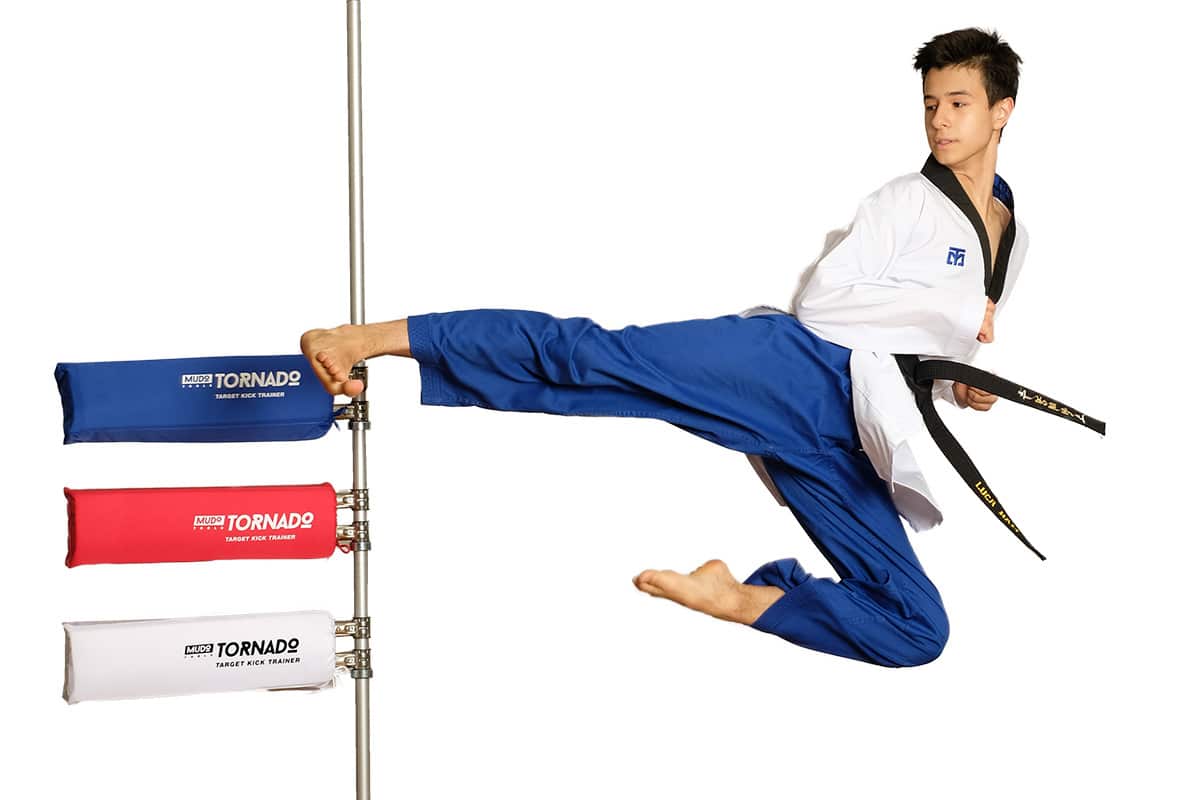
Kick device with multiple target poles

Contributions for Kick Training Equipment – Train Better Than with a Punching Bag

Kick device with multiple target poles

Which kick training equipment is truly useful

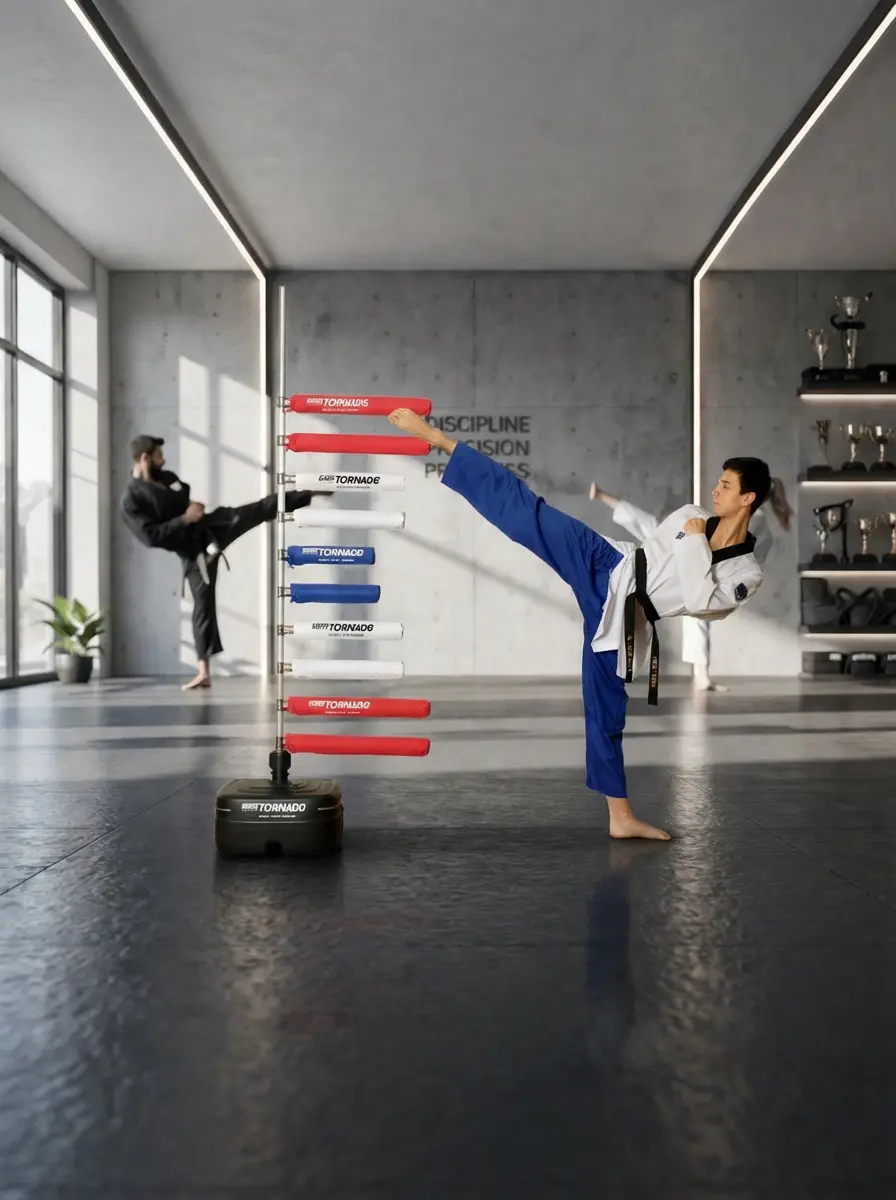
Effective kick training equipment is characterized by its ability to bring movement into training. It challenges you to place your kicks cleanly and adapt your reaction.

Moving targets, changing heights, and dynamic stimuli make your training more realistic. This not only improves your technique but also your timing and control.

The closer your training is to real-life situations, the greater your progress.

How to Choose the Right Training Equipment

The choice of the right device depends on what you want to improve. For beginners, a clear training goal is important, while advanced users should pay more attention to timing and reaction.

Make sure the training equipment actively challenges you and isn't just used passively. Equipment that requires movement and adaptation will advance you significantly faster.

A good training device cannot completely replace a training partner, but it can realistically simulate many crucial aspects.

Improve Taekwondo Kicks

Kick device with multiple target poles
Kick Training Equipment | Posts
April 24, 2026Anyone who wants to learn taekwondo kicks at home quickly realizes that a few high kicks in the air look like training, but are often of little technical benefit. Without clear sequences, clean distance and controlled repetition, mistakes creep in. This is exactly where it becomes clear whether home training is just exercise or whether it really improves your technique. Learning taekwondo kicks at home means more than just kicking In taekwondo, it's not the number of kicks that makes the difference, but their quality. A dollyo chagi with poor hip rotation, an ap chagi without a clean chamber or a yop chagi without a stable axis may look dynamic, but it loses precision, impact and control. This often becomes apparent later at home than in the dojang because there is no direct correction. That's why your training at home needs a clear priority. First comes technique, then speed, then height and only at the end hardness. Many people train the other way around and wonder why their kicks are fast but unclean. Control starts with technique. Nevertheless, the advantage of home training is huge. You can build up repetitions, consolidate movement patterns and work specifically on weaknesses without having to rely on gym time or training partners. Regular short sessions are often more effective than infrequent long sessions, especially for kicks that rely on timing and a sense of movement. Which kicks you should train at home first Not every kick is equally suitable for starting out in the living room, basement or home gym. If you are training at home, you should first choose the techniques that give you a stable base. These include Ap Chagi, Dollyo Chagi and Yop Chagi in particular. These three kicks cover key movement patterns: forward pressure, rotation and lateral stability. The Ap Chagi looks simple, but is technically more demanding than many people think. The decisive factors are the clean tightening of the knee, active foot tension and controlled retraction. If you work sloppily here, you will later make the same mistake in faster combinations. Dollyo Chagi is about more than just leg swing. The hips, standing foot and upper body must work together. If the stance foot doesn't turn in cleanly, you block your rotation and lose range. This sequence can be practiced very well in isolation at home because you can concentrate fully on the line of the kick. The Yop Chagi requires a higher level of balance and body tension. For many athletes, this is precisely why they avoid it. This is a mistake. It is particularly valuable at home because it shows you how stable your technique really is. If you bend sideways or don't align your hips properly, you'll notice it straight away. How to set up effective home training A good kicking workout at home doesn't have to be long. It has to be precise. Three sessions per week of 20 to 30 minutes each are often enough if the content is clearly defined. Rather than haphazardly throwing in ten kicks, train two techniques cleanly and with focus. Start with mobility for the hips, posterior chain and ankles. This is followed by slow technique runs without a focus on strength. The aim here is to consciously set the movement. Only when the line is right do you increase the speed. Finally, you work on series, reaction or accuracy. A simple structure works particularly well in practice. First 5 minutes of mobility and activation. Then 10 minutes of slow technique, for example Ap Chagi and Dollyo Chagi on both sides. Then 10 minutes of target-oriented kicking with clear repetitions. If there is still time, short combinations follow with a focus on retreating, covering and changing stance. Load control is important. Daily full-gas training does not make kicks better. It often just makes them less clean. The hips and lower back need a clean load and sufficient recovery, especially with fast turning movements. Technique grows through quality, not through blind wear and tear. Learning taekwondo kicks at home without a training partner The biggest bottleneck in home training is rarely motivation. It is feedback. Without a partner, trainer or claw, many athletes lack feedback on whether the distance, timing and point of impact are correct. This is precisely why aerial kicking alone remains limited in the long term. You need a target that allows you to kick realistically. Not just for hitting, but for precise repetition. Good training equipment doesn't help because it makes training more comfortable, but because it makes mistakes more visible. If you hit too low, too late or at the wrong angle, you will notice it straight away. This is worth its weight in gold in technique training. Classic sandbags have clear strengths, but also limitations. They are very forgiving, often promote hardness rather than clean lines and give you little feedback on timing or fluid follow-up techniques. This is not always enough for taekwondo, where quick changes of direction, precise striking surfaces and controlled returns are important. Modern kick trainers with a reset mechanism or rotating impact points create a different training experience. They make series more fluid, challenge your timing more and help you to not only hit kicks hard, but also technically clean. If you want to work seriously on precision at home, you will not save time, but detours. The most common mistakes when training at home A lot of progress doesn't fail due to a lack of talent, but due to small technical mistakes that become ingrained week after week. The most common is speeding up too early. As soon as kicks are executed quickly before the movement is stable, the focus shifts from the sequence to the impulse. This looks explosive, but worsens the technique. A second mistake is a lack of retreat. In taekwondo, a good kick does not end in a hit, but in a controlled return. If you drop your leg after the kick, you lose balance, cover and rhythm for the next action. At home, you should therefore train each repetition as if the follow-up movement were to follow immediately. In addition, the focus of training is often wrong. Many people work almost exclusively on height. High kicks are impressive, but without a stable base they are of little athletic value. A clean kick at medium height with a good line, tension and timing will get you further than ten unsafe headbutts in the air. Space is also often underestimated. If you train on a slippery floor, with a poor standing surface or between pieces of furniture, you unconsciously change your movement. The kick becomes more cautious, shorter or more tense. You don't need a huge room for serious home training, but you do need enough space for proper technique and a secure stance. How to measure progress If every repetition looks the same, you are training cleanly. If every tenth repetition looks significantly different, you lack control. Progress in kick training is therefore not only reflected in height or hardness, but also in repeatability. If you can technically perform the same kick ten times in a row, your quality will improve. Film individual sets with your smartphone. Not for show, but for analysis. Pay attention to the knee chamber, hip rotation, foot position, upper body posture and retraction. A video doesn't replace a trainer, but it takes away the illusion that a kick feels clean when it's not. Home training is even better when the equipment itself provides feedback. Systems that focus more on speed, reaction or clean target contact make progress more concrete. This not only motivates you, but also sharpens your focus. You don't just train more, you train more precisely. This is exactly where solutions like Mudotools come in, because they make technique training at home more controlled, dynamic and comprehensible. A realistic training plan for 4 weeks If you want to learn taekwondo kicks at home, a simple four-week block is often more effective than constant variety. Week 1 is all about basic technique. Slow repetitions, clear chamber, stable stance. In week 2, you increase the tempo slightly and add simple target work. In week 3, short combinations are added, such as Ap Chagi followed by Dollyo Chagi. In week 4, you train the same sequences under a little more time pressure. The point is not to do something completely new every week. The point is to be able to call up the same technique under better conditions. First clean, then fast, then fluid. If technique makes the difference, that's where training has to start. For advanced skiers, the same plan can become more demanding. Less basic technique, more series, more bilateralism, more focus on reaction changes. The opposite applies to beginners. Preferably fewer kicks, but better controlled. So it depends on your level, not some standard plan from the internet. Training at home is no substitute for good club training. But it is a great addition if you build it up properly. If you work regularly, in a controlled manner and with a clear goal, you will not only improve individual kicks, but also your overall sense of movement. And that's exactly what you'll feel later on the surface - in the distance, timing and confidence of every technique. [...] Read more...
April 24, 2026If you really want to improve your kicks, sooner or later you'll end up asking yourself exactly this question: claw vs kicker - what's the most effective way to train technique, timing and precision? The honest answer is not black and white. Both training tools have their place. But they provide different stimuli, require different sequences and produce very different results depending on the training goal. Especially in taekwondo, kickboxing or MMA, it is not enough to simply kick often. When technique makes the difference, what counts is how cleanly you approach the kick, how quickly you get back into position and whether you have distance, rhythm and reaction under control. This is exactly where classic prat training differs from modern kicking equipment. Pratze vs kick device - the fundamental difference The claw is a classic partner tool. A trainer or training partner holds the target, sets the angle, height and sometimes also the rhythm. This makes claw training lively. It reacts, varies and can be spontaneously incorporated into technique or combination training. A kick device works differently. It is not just a hit point, but a training system. Depending on the design, you get defined targets, repeatable movement sequences, reset mechanics, rotational behavior or even measurable data. This makes training more consistent, more controlled and, in many cases, more realistic for precisely the phase in which clean repetition and objective improvement are required. So the difference is not just in the material. It lies in the training principle. The claw lives from interaction. The kick machine thrives on reproducibility. What makes the claw strong Pratzen have one big advantage: they bring dynamism to training. A good holder can challenge you, fake you out, build up pressure and give you changing goals. This is valuable for reaction, stress resistance and the transition from technique to application. The claw also remains practical for trainers in the club. It is quickly ready for use, easy to transport and tried and tested for many standard exercises. It works particularly well for children, beginners or in groups with changing drills. You don't need much set-up and can get started straight away. There is also the direct human factor. An experienced coach sees mistakes immediately, corrects the hips, cover or stance and adjusts the height spontaneously. A rigid aid alone cannot replace this. Nevertheless, the brace has clear limits. The quality of the training depends heavily on the person holding it. Poor angles, unsteady holding or a lack of timing make even good kicks unclean. And those who train at home often have exactly the same problem: no second person, no constant repetition, no reliable rhythm. Where the kick machine has a clear advantage A good kick machine eliminates many of these weaknesses. You don't need a partner, but you still have a defined goal and a comprehensible sequence of movements. This is particularly useful if you want to improve your technique in isolation - i.e. not just hitting, but hitting cleanly. This is crucial for high kicks, spin kicks or fast series. It's not just the hit that counts here, but also the return, the timing between several actions and precision under speed. A device with a clean return or rotating hit point keeps the flow of movement alive. You are not kicking a dead target, but training more rhythmically and closer to real sequences. Added to this is the measurability. As soon as speed, repetition quality or hit pattern become comprehensible, the training changes. Feeling becomes feedback. This not only motivates, but also shows whether a technique is really becoming faster, more precise or more stable. For many athletes, this is precisely the turning point. They realize that although they train a lot, they can hardly make any progress. A kick device closes this gap better than a classic claw. Pratze vs kick device in technique training When it comes to developing a clean kicking technique, control is more important than chaos. This is where the kicking device comes into its own. You can repeat the height, distance and angle without the target constantly changing. This allows you to grind in movement patterns cleanly. This is particularly relevant for roundhouse kicks, side kicks, hook kicks or spinning techniques. Many mistakes do not occur in the actual hit, but before and after it - when turning in, in hip work, in stance stability or when returning to the starting position. A reproducible target makes these errors visible. The claw can also do this, but only with a very good holder and usually only for shorter sequences. As soon as fatigue comes into play, the target quality suffers. This is not a criticism of the claw, but simply its nature. Timing, reaction and sense of distance This is where it gets interesting, because it is precisely at this point that it is often hastily said that you always need a partner for timing. This is only partly true. With the claw, you train reactive timing in interaction with another person. You read movements, react to signals and adapt your actions. This is great for situational adaptation. With a modern kicking device, on the other hand, you train technical timing. In other words, the question of whether your kick arrives at the right moment, with a clean rhythm and controlled line. This is extremely valuable, especially for series, switching between left and right or combinations with a defined return. Your timing is not improvised, but sharpened. The feeling for distance depends on the model. A simple punch target is only of limited help here. A kicking device that supports the flow of movement and precise aiming points is much more powerful. This is a real advantage, especially in home training, because you don't just estimate distance, you systematically build it up. Things are often clearer at home In the club, you can discuss the claw vs. kick device at length. At home, the answer is usually simpler. If you train without a partner, you need a system that makes repetition, precision and load possible on your own. This is exactly where the claw reaches its natural limit. Of course, you can improvise with a hand claw or make do with simple targets. But this remains a compromise. You will then often train less fluidly, interrupt more often and hardly get any objective feedback. A kick device is much more logical for this application. It saves coordination, reduces idle time and turns individual kicks into structured technique training. For young people, adults and even ambitious beginners, this is often the difference between occasional trial and error and real progress. What coaches and clubs should consider In clubs, it's not just about what works well, but also about what can be used efficiently in groups. The claw remains strong when coaches want to give direct corrections, encourage partner work and train reactions under changing signals. A kick device, on the other hand, brings structure to station training, technique circles and individual focus work. Athletes can repeat cleanly, while trainers can observe and correct more specifically. This takes the pressure off the process and simultaneously increases the quality of the repetitions. This is particularly important for heterogeneous groups. Beginners need clear goals and reliable movement sequences. Advanced exercisers need speed, precision and a repeatable load. A good piece of equipment covers both better because it changes the level of difficulty not by chance but by training control. What is suitable for whom? If you mainly want interactive partner drills, spontaneous commands and classic coaching work, the claw is still a good choice. It is fast, direct and firmly anchored in martial arts. It is particularly useful for combinations with boxing, simple reaction stimuli and group training. If, on the other hand, you want to work specifically on kicking technique without being dependent on a partner, the kicking device is usually the better choice. This is especially true for those who train at home, want to measure progress or work on fluid kick series, timing and precision. Anyone training for performance should therefore answer the question practically rather than romantically. What gives you more clean repetitions? What makes your training more controlled? What shows you whether you are really getting better? This is precisely why many ambitious athletes and trainers no longer rely solely on traditional solutions. Systems like those from Mudotools are strong where conventional equipment reaches its limits - with reproducible movements, dynamic recovery and technique training with a real training flow. The real decision behind claw vs. kick device In the end, it's not about which tool is more traditional. It's about which tool supports your goal better. If you just want to get kicks in somehow, many things will do. If you want to make them faster, more precise and more controlled, you have to choose more accurately. Pratzen are good if a strong partner or trainer supports the drill. Kick devices are strong if the quality comes from the system itself. Both can be useful. But for focused kick training, for home training and for measurable progress, the kick machine often has the clearer training logic today. Don't just train harder. Train so that every repetition counts. [...] Read more...
April 20, 2026Anyone who wants to kick cleanly usually realizes it quickly in training: power alone is not enough. The kick may be hard, but not precise. Or fast, but without clean timing. This is precisely why the question of which training device is really useful for kicks is not a minor matter. It determines whether you just collect a lot of repetitions or whether your technique actually improves. A good training device must match your goal. Do you want to build up toughness, improve your reaction, work on your distance or perform kicks in a more fluid and controlled manner? Many people train with whatever is available. Sandbag, claw, maybe a punching pad. That works up to a point. But when technique makes the difference, the choice of equipment becomes crucial. Which training device for kicks really works for you? The honest answer is: it depends on what you want to train. For raw punching and kicking hardness, a sandbag is still useful. For partner work and variable angles, claws are strong. For targeted kick training with a focus on timing, precision, return and rhythm, both often reach their limits. Taekwondo and kickboxing in particular are not just about hitting a target. It's about getting into the technique quickly, rotating cleanly, hitting at the right moment and returning directly to the starting position in a controlled manner. Conventional equipment only partially reflects this. That's why it's worth taking a closer look at the differences. Sandbag - strong for toughness, limited for timing The punching bag is a classic in martial arts. It is very forgiving, robust and suitable for intensive use. It is useful if you want to kick series, build up your stamina and feel how hard you hit. It can be particularly useful for low kicks, front kicks or hard roundhouse kicks. However, its weakness lies precisely where many people want to improve their technique. The sandbag moves sluggishly, absorbs energy and only gives you limited feedback on how precise, fast or clean the kick was. Although you hit something real, you often don't train the exact moment of impact. Return movements and working towards a smaller, clearly defined target point are also neglected. This can be problematic for beginners. If you only train for impact too early, you can easily build up unclean patterns. Advanced users notice another problem: the training becomes monotonous. Lots of repetitions, little variation, hardly any measurability. Pads and punching pads - good with a partner, weaker alone Pads are valuable in technique training because they are mobile. A trainer or partner can change angles, vary distances and give direct feedback. This is great for combinations, reactions and tactical sequences. This is why claws remain a standard, especially in club training. The catch is obvious. You need a partner who keeps it clean, has the right timing and understands your level of training. Poor claw work produces poor kicks. What's more, many holders compensate unconsciously. They go towards the kick, bounce incorrectly or don't give a clear aim. Then you train less precision and more improvisation. This is hardly a reliable solution at home. If you train alone, you will quickly fall off the grid with claws. This is exactly where the gap between classic equipment and modern kick trainers arises. Which training device for kicks is better for technique training? As soon as your focus is on technique, the requirements change. Then you don't need a device that simply withstands kicks. You need a system that gives you a clear goal, keeps the movement fluid and shows you whether the kick was really clean. This is exactly where modern kick trainers come in. Instead of just providing resistance, they create defined stimuli for accuracy, timing and rhythm. Rotating hitting surfaces, quick resetting or sensor-based measurement make a difference that you notice immediately during training. Not in theory, but with every repetition. A kick on a small, reactive target requires more control than a kick on a large punching bag. You have to aim cleanly, hit the target correctly and finish the movement in a stable manner. This trains technique much more directly. This pays off especially with roundhouse kicks, side kicks, axe kicks or fast series with footwork. What is important for a good kick trainer A good training device for kicks should do three things. It must offer a clear goal, react dynamically to the hit and enable repeatable training. If only one of these is missing, the learning effect suffers. A clear target improves precision. Athletes who want to control the height and area of their hit benefit enormously from this. Dynamic reaction is important so that you don't fall into static movements. And repeatability ensures that technique does not depend on chance, but can be trained. It becomes interesting when a device also makes it possible to measure how quickly or cleanly you work. Then you're not just training by feel. You see progress. This is motivating, especially when training at home without trainer feedback. This is exactly why modern solutions such as rotating kick pads, magnetic reset or speed measurement work so well. They turn a simple hit into a technical task. Control starts with the technology. For home or club - the application is decisive Not every training device has to be able to do everything. Different requirements apply for everyday club use than for home training. Versatility is important in a club. The equipment should cover different athletes, sizes and performance levels. It must be quick to use and work consistently even with frequent use. At home, efficiency is what counts most. You want to train sensibly without a partner, have little set-up time and collect real repetitions that do more than just let off steam. This is exactly where the sandbag and claw often lose their value. You need space, a partner or a very clear training structure to prevent the training from becoming arbitrary. A specialized kick trainer can close this gap. They make solo training technically more challenging and at the same time more motivating. This is particularly relevant for young people and adults who want to practice regularly but are not in the dojang or gym every day. For beginners, advanced practitioners and trainers Beginners need orientation above all. A device with a clear target area helps to learn movements properly. Targets that are too soft or too large often lead to inaccurate hits not being noticed. Those who work precisely early on build up better automatisms. Advanced players benefit more from dynamics and measurability. Here it is no longer just about executing the kick in principle, but making it faster, more controlled and closer to competition. A device that supports reset, rhythm and direct follow-up movements makes much more sense than static resistance. Trainers and clubs are thinking one step further. They need training equipment that structures group work, makes progress visible and allows different forms of exercise. If a device not only replaces technique training, but also enhances it, its value in everyday life increases enormously. What many people misjudge when buying The most common mistake is to confuse hardness with training quality. A heavy, solid piece of equipment often automatically looks professional. When it comes to kicking technique, however, this is only part of the truth. If the target reacts too sluggishly or doesn't give clear feedback, you are training for strength rather than quality. The second mistake is monotony. Many machines work on paper, but end up in the corner after a short time because the training becomes too monotonous. Motivation is not a secondary issue, especially in home training. Equipment that reacts quickly, allows variation and makes progress visible is used more often. And only equipment that is used improves technique. The third mistake is a lack of fit with the discipline. Taekwondo has different requirements than kickboxing or karate. Someone who works a lot with speed, hip height, serial kicks and clean returns needs different stimuli than someone who primarily trains for punching power. The most sensible decision for many martial artists If you're wondering which training device for kicks is worthwhile in the long term, you shouldn't start with the question of the best-known device. Instead, ask yourself what you are currently missing in your training. More toughness? More precision? Better timing? Cleaner series? Solo training without losing quality? The sandbag is still useful for pure punching power. For supervised partner training, claws have their place. However, if you want to work specifically on kicking technique, hit more precisely, kick more fluently and track your progress, specialized kick trainers are usually the better choice. Modern systems in particular, such as those developed by Mudotools, start where traditional training tools leave off. They make kick training more controlled, dynamic and measurable. This is not a gimmick. It's training logic. What counts in the end is not how traditional your equipment is, but how well it supports your goal. If you want every repetition to be clearer, faster and cleaner, don't choose equipment based on habit. Choose it for effect. [...] Read more...
April 19, 2026training equipment for taekwondo clubs How to improve technique, timing and training quality in your club training equipment for taekwondo clubs is particularly interesting when many athletes are training at the same time and training time needs to be used efficiently. Anyone who has ever organized large groups at a few stations in a club knows the problem: a lot of waiting time, few repetitions and fluctuating quality. This is precisely where the advantage of modern solutions lies. Instead of just training strength or endurance, they enable targeted technique training with clear target stimuli and better repeatability. training equipment for taekwondo clubs: what it needs to do Every minute counts in the club. Training equipment for taekwondo clubs must therefore be able to be used quickly and cover several performance levels at the same time. Important factors are: clear target points for clean technique fluid movement sequences without interruption high repeatability for many athletes direct feedback on hit quality Only when these points are met can real technique training be achieved instead of mere repetition. Why a sandbag and claw are not enough in a club Sandbags and pads are tried and tested training tools. They have their place - but do not cover all requirements in the club. Sandbags often lack precision. Many hits are powerful but technically imprecise. Pads, on the other hand, depend heavily on the partner and are difficult to use efficiently with large groups. A training device for taekwondo clubs fills precisely this gap. It offers reproducible conditions and allows several athletes to train at the same time. For which club goals a training device for taekwondo clubs is worthwhile A good training device supports several areas at the same time: Technique: clean lines and precise hits Timing: fluid sequences and quick follow-up movements Reaction: realistic movement sequences Motivation: clear target stimuli and visible progress Particularly in clubs, the quality of training increases significantly when progress is visible. This motivates children, young people and adults alike. Which equipment is really useful in taekwondo Not every piece of equipment is suitable for taekwondo. The decisive factor is whether it fulfills sport-specific requirements. Effective training equipment for taekwondo clubs should: enable variable kicks offer quick recovery promote precise target work allow fluid series Systems with movable or rotatable target surfaces and clearly defined aiming points are particularly suitable. These come much closer to the real technique than rigid training aids. Modern kick training equipment also offers advantages here, as it combines technique, dynamics and repeatability. Using training equipment for taekwondo clubs in everyday training For training equipment for taekwondo clubs to be truly effective, it must be integrated into the training routine. Typical applications: Station training with clear tasks Technique blocks with a focus on precision Reaction exercises with target changes Preparation for sparring or competition It is important that the equipment is not just used to let off steam. Clear tasks ensure real progress. What coaches should look out for when buying When buying training equipment for taekwondo clubs, it's not just stability and price that count. Important criteria are: Ease of use in group training Adaptability for different age groups clean target geometry for technique training low set-up effort Optionally, measurability can also be an advantage. Systems with measurement data make progress visible and increase training quality. For which clubs a training device for taekwondo clubs is particularly worthwhile A training device for taekwondo clubs is particularly useful for: Clubs with large groups Children and youth training performance-oriented teams Trainers who want to work in a more structured way The larger the group, the greater the effect: more active time, better technique and less idle time. Why modern equipment helps clubs to progress A club develops through training quality. A good training device for taekwondo clubs increases the number of repetitions, improves technique and makes progress visible. Athletes train with greater concentration, coaches can make more targeted corrections and sessions become more efficient. If you want to develop better technique in the long term, you need clear target stimuli and clean sequences. This is the difference between training and real progress. FAQ: training equipment for taekwondo clubs Which training equipment makes sense for a taekwondo club? Training equipment for taekwondo clubs should enable clear targets, quick repetitions and easy integration into training. Why is a sandbag not enough for a club? A sandbag trains strength, but not precise technique or reaction. More targeted stimuli are needed for technique training. How does a training device improve club training? It increases active training time, improves technique and makes progress visible for coaches and athletes. [...] Read more...
April 19, 2026measure kick speed training How to improve your technique, timing and explosiveness in martial arts kick speed training helps you to objectively improve your kicks. Many athletes rely on their instincts during training - but this is often misleading. A kick can look hard and feel fast, but is actually slower than expected. This is where measurable training becomes crucial. Especially in taekwondo, kickboxing or karate, it's not just strength that counts. It is important how quickly the kick starts, how cleanly it goes through and how controlled it hits the target. If you measure these factors, your training will be more targeted and efficient. Measure kick speed training: why speed alone is not enough A fast kick is not created in isolation. Behind speed are technique, body control, timing and efficient movement. If you just try to kick faster, you often lose precision or stability. Measure kick speed training shows you whether a change really brings progress. If you improve your hip rotation or your stance, you can see it immediately. Progress can be measured instead of just felt. This is particularly valuable for trainers. Specific values can be used instead of general instructions. This creates focus and motivation during training. What are the specific benefits of kick speed measurement training? The biggest advantage is clarity. Many people train with sandbags or claws and hope to make progress. Without measurement, it remains unclear whether anything is really improving. With kick speed measurement training you can recognize differences between: left and right side different types of kicks fresh and tired repetitions This makes training more precise. You immediately recognize where you are stronger and where you need to work on. What factors influence kick speed? Kick speed is the result of several components: Clean technique and movement sequence active hip rotation Stable standing position ability to react quick return movement A kick speed measurement training makes it clear which of these factors needs to be improved. Without measurement, this often remains unclear. Measurement alone is not enough Data only helps if it is used correctly. If you only aim for maximum speed, you run the risk of poor technique. A fast but uncontrolled kick will not give you an advantage in competition. Kick speed training should therefore always be combined with precision. The goal is not just speed, but controlled, clean movement. This is what effective kick speed training looks like Good training consists of clear phases: Technique phase with clean, controlled repetitions Measurement phase with short, intensive series Analysis phase to evaluate the results Example: 3 sets of 5 kicks per side, with sufficient rest between repetitions. This is how you measure real performance and not just fatigue. Measure kick speed training in particular only works effectively if every repetition is performed with high quality. Which training equipment is useful The sandbag is good for strength and load. Pads help with combinations and rhythm. However, both have limits when it comes to measurable training. For precise kick speed measurement training, training solutions with clear target points and direct feedback are much more effective. Devices with speed measurement enable reproducible results and structured improvement. This is a great advantage, especially for home training. Without a training partner, feedback is otherwise limited. For whom is kick speed measurement training useful? This training is particularly worthwhile for: Beginners who want to understand technique more quickly Advanced athletes who want to train more precisely Competitive athletes who want to optimize their performance Trainers who want to structure their training Measuring kick speed training is particularly beneficial when progress needs to be visible and comprehensible. Typical mistakes when measuring Common mistakes in training: Different distances and conditions Excessive fatigue during the measurement Improper technique for better values only training one side Clean conditions are crucial for kick speed measurement training to be truly meaningful. Measurability changes your training If you measure speed, you automatically train more consciously. Every repetition takes on meaning. Progress becomes visible. This is precisely the difference between modern training approaches: Not just training harder, but training in a more targeted way. kick speed measurement training brings structure, control and real development to your training. If you want to know whether you are really getting faster, you need more than just a feeling. You need clear data and clean technique. FAQ: kick speed measurement training Is kick speed measurement training useful? Yes, it helps you to measure your progress objectively and work specifically on your technique and speed. How do you measure kick speed? With special training equipment or sensors that record and evaluate speed and hits. What is more important: speed or technique? Both belong together. Speed without technique brings no advantage. Technique is what makes speed effective. [...] Read more...
April 19, 2026Martial arts equipment Reactivity How to improve reaction time, timing and kick precision in training A martial arts reaction time device helps you to improve your reaction time, timing and precision in a targeted manner. Many kicks are not late in training because of a lack of technique - but because the stimulus, decision and movement do not interact properly. In taekwondo, kickboxing or karate, a typical problem quickly becomes apparent: you can build up strength on the punching bag and train combinations on the claw. However, the ability to react in martial arts only arises when a target reacts, moves or forces a quick decision. This is exactly where classic training is often not enough. Martial arts equipment reactivity: what it needs to achieve In martial arts, the ability to react is a combination of perception, decision and execution of movement. Effective martial arts equipment must therefore be able to do more than just withstand hits. It has to generate real stimuli to which you have to react - quickly, in a controlled and repeatable manner. A static punching bag remains predictable. A claw is dependent on the training partner. A martial arts device creates constant training conditions and forces you to use clean timing. This is crucial if you want your technique to work under pressure. Reactive martial arts equipment vs sandbag and claws The punching bag is ideal for hardness and fitness. It has clear limitations for training reaction time: no change of target, no feedback, no real stimulus situation. Pratzen can simulate realistic situations - but only if the partner works precisely. Without a training partner, this training is completely eliminated. A martial arts device with reaction time closes precisely this gap: independent, repeatable and measurable. Understanding reactivity in martial arts correctly Speed alone is not enough. A quick kick is useless if the distance or timing is wrong. The ability to react means recognizing the right moment and implementing it with technical precision. Equipment with moving or rotating striking surfaces - such as a kick training device - enables you to do exactly this. You react to a real stimulus, not a static target. Martial arts equipment reactivity functions A high-quality martial arts device with reaction time is characterized by the following features: Movable or rotating target areas for realistic stimuli Fast reset for high repetition rates Clear target points for precise technique training Optional: Measurable speed for objective progress The big advantage: you don't just train the kick, but the entire sequence - from perception to clean execution. Martial arts equipment Reactivity in training Especially when training martial arts at home, you often don't have a training partner. A martial arts device for reactivity enables targeted reaction training on your own - structured and effective. In a club, a martial arts device with reaction time ensures more efficient station training. Beginners improve their timing, advanced players increase precision and speed. When martial arts equipment with reaction time is worthwhile When your goal is: to improve your kicking technique to shorten your reaction time make your training independent of your partner measurably increase your performance then a martial arts device for reaction time is one of the most effective additions to your training. When technique makes the difference, you need more than strength training. A martial arts reaction device forces you to think faster, work cleaner and hit more precisely. FAQ: Martial arts equipment reaction time How do you train reaction time in martial arts? You train your reaction time through moving targets, quick changes of direction and clear stimuli - ideally with a martial arts equipment reaction time. Is a sandbag good for reaction? No, a sandbag is static. For real responsiveness, you need a martial arts device with movement and feedback. Which device replaces a punching bag? A martial arts device with reaction time combines movement, feedback and accuracy and is therefore the most effective supplement. [...] Read more...
April 16, 2026Anyone who constantly steps too short in sparring or stands too close to their opponent when counter-attacking does not have a strength problem, but a distance problem. This is precisely why kickboxing distance awareness training is one of the exercises that most quickly determines hit rate, timing and control - in clubs, in competitions and also in home training. Why distance awareness makes such a difference in kickboxing Distance awareness is more than just the right distance to the target. It combines footwork, reaction, timing and technique to make a split-second decision. You have to recognize when you are out of your opponent's range, when you are entering the strike zone and how much distance your kick or punch combination really needs. Many train technique in isolation. The kick looks clean, the hips work, the cover is right. Nevertheless, the hit doesn't land in sparring. The reason is often simple: the technique is right, but the distance is not. When technique makes the difference, control starts with the distance to the target. This is particularly tricky in kickboxing because the distance is constantly shifting. A small step backwards immediately changes the range for a low kick, front kick or roundhouse. If you can't read this, you react too late or miss. This not only costs points, but also balance and energy. Training distance awareness in kickboxing - what often goes wrong The most common mistake is monotonous training on a static target. A punching bag is very forgiving. It stays where it is. This helps with hardness, rhythm and basic technique, but only to a limited extent with real distance work. In a fight, the target moves, the angle changes and your timing has to keep up. The second mistake is not focusing enough on the entry. Many people only train the hit, not how to get there. The first small step often determines whether the kick arrives cleanly or whether you run into a counterattack. A sense of distance is therefore not only created at the moment of contact, but also when reading the situation. The third mistake: too little feedback. If you train at home without a partner, you often don't realize exactly whether you've worked from an optimal range or whether you've just improvised your distance. Progress then remains diffuse. This is a problem for ambitious athletes and coaches because proper technical training must be measurable and repeatable. How good distance training really works Effective distance training needs three things: a clear goal, variable distances and direct feedback. Only when you can regularly differentiate between too short, just right and too close will you develop a resilient sense of distance. In practice, this means: don't just train straight series, but work with deliberately changing starting points. A front kick from an ideal distance feels different to a front kick after moving backwards or after a sideways step. The same applies to low kicks and roundhouses. The technique remains similar, the distance decision is new every time. Then there is the timing. Distance feeling is not static. It depends on you hitting the right moment. An opponent who turns, stops or advances changes the situation immediately. This is why forms of training that combine target contact, reset movement and reaction work particularly well. The result is not a rigid process, but a fluid flow. Drills that noticeably improve your sense of distance A great way to start is with a simple change of distance using a single technique. Take the front kick, for example. Start a little too far away, take a small step forward and hit cleanly. Then start too close, take a small step back or change the angle and only then hit the target. This teaches your body to actively correct the distance instead of just trying to reach it. Reaction drills with a clear reset of the target are also very effective. If the hit pattern immediately returns to the starting position after the kick, you can train series without losing the flow of movement. This is particularly good for timing and follow-up because you don't have to re-sort after every hit. For advanced players, a drill with two distances in one combination is worthwhile. Example: Jab or feinting from long range, then kick from medium range. The idea behind this is simple. In a fight, almost everything never stays within one range. If you train distance awareness, you have to learn to re-read the distance within a combination. Stop drills are also useful. Go into the distance explosively, stop just before the target and only kick on the second impulse. This trains control. If you always go all out, you often develop speed, but no fine feeling for the space in front of the target. Training distance awareness in kickboxing without a training partner This is exactly where ordinary home training and targeted technique training differ. Without a partner, the variable movement is often missing. Nevertheless, you can build up distance awareness very effectively if your training equipment allows for dynamic sequences and gives you a realistic target image. Rotating or resetting striking surfaces are much closer to combat practice than a pure sandbag. They force you to use precise timing and help you to read the moment of contact more accurately. The training becomes even more intense when speed or reaction time become visible. Because then you are not only training your feel, but also recognizing whether your distance decision is becoming faster and cleaner. This is precisely the advantage of modern training solutions such as Mudotools. They don't replace an opponent, but they close a gap that many people are familiar with from training at home: a lack of feedback, static sequences and little control over your actual progress. When every hundredth counts, repetition alone is no longer enough. Which techniques particularly benefit from distance training Front kicks benefit early on because they run strongly over linear range. You quickly notice whether you are estimating the distance correctly or whether you need to follow up. This makes them ideal for beginners and for precise corrections in technique training. Roundhouse kicks are more complex. In addition to the distance, the angle also comes into play here. If you don't stand well to the side, you will often hit the ball poorly despite a good range. This is why distance training for roundhouses should always be combined with footwork. Timing is particularly important with the low kick. If you start too early, you will miss. If you start too late, you are often already at the wrong distance. Good low kicks rarely come from a standing position. They come from movement, from reading your opponent and from the right moment. Boxing combinations also benefit. Many people first think of kicks when they think of distance. In fact, clean punching distance is just as important. If you constantly overreach with your hands, you lose balance and open yourself up to counterattacks. Distance training should therefore never consist solely of kicks. How to incorporate the topic into your training plan in a sensible way Two short, focused sessions per week often achieve more than one long session without a clear goal. A sense of distance improves through quality, not blind volume. Work at the beginning of a session, when your mind is fresh and your timing is still responding properly. A sensible structure starts with individual techniques at varying distances. This is followed by combinations with step or angle changes. Finally, there are reaction drills under light pressure, for example on a signal, with a time limit or in short intervals. This keeps the training sporty, controlled and measurable. Trainers can control this very well in the club by deliberately specifying distances instead of just counting hits. The same applies to individual athletes at home. Set a focus for each session. Today only front kick and entry. Next session angle and roundhouse. Then reaction and follow-up. This is how a vague feeling becomes a resilient system. How you can really recognize progress Not just the fact that you hit more often. A better feel for distance is shown above all by the fact that your technique becomes smoother. You have to make fewer corrections, stand more stable and get back into position more quickly. Hits feel more controlled, not more hectic. Another marker is your decision time. If you recognize earlier whether you need to move forward, stop or get out, your confidence automatically increases. This not only makes you more precise, but also more efficient. You waste less energy on wrong paths. This is worth its weight in gold for competitors. For beginners too. Because a good sense of distance protects you from bad habits that are difficult to correct later on. Distance is not a talent that you have or don't have. It can be trained - if you don't leave it to chance. Work precisely, train with feedback and give your timing a real goal. Then every kick becomes more than just movement. It arrives where it is supposed to arrive. [...] Read more...
April 16, 2026The point often goes not to the athlete with the best kick, but to the one who reacts a tenth of a second earlier. This is precisely why Taekwondo reaction training exercises are more than just an addition to the warm-up. They help to decide whether a counter-attack is on target, whether the distance is right and whether technique turns into hits. Reaction in taekwondo is never just a question of fast legs. It comes from perception, decision and clean movement. If you just want to get faster in a hurry, you often miss the real problem. If technique makes the difference, reaction training must be structured in such a way that eye, timing, footwork and kick mechanics work together. Why taekwondo reaction training exercises are often trained incorrectly Many people train reaction according to a simple pattern: partner shows something, athlete somehow kicks it quickly. This brings speed in the short term, but not automatically quality. The body then learns one thing above all - to become restless. That's not enough in competition or sparring. There you have to recognize stimuli clearly, choose the right technique and hit with stability despite the pressure. There is a clear difference between fast movement and good reaction. A good reaction is controlled. It saves distance, keeps your guard stable and remains precise even when you are tired. This is where general fitness speed is separated from martial arts-specific reaction time. In taekwondo, you don't need any kind of speed. You need speed at the right distance, at the right angle and at the right time. What a good reaction exercise in taekwondo must achieve A meaningful exercise always has a clear trigger. This can be a visual signal, a movement by your partner, a change of direction or an unexpected target. It is important that the stimulus is not predictable, but that the technical execution remains clean. The exercise must also match the training goal. A beginner benefits from simple signals and a limited range of techniques. A competitor needs more varied exercises with pressure to make decisions. If you train at home, you should choose exercises that work without a partner and still require timing and reset speed. Good reaction training therefore always has three levels: recognize, decide, execute. If one of these is missing, reaction quickly becomes just blunt repetition. 8 Taekwondo reaction training exercises for more timing 1. color signal and direct hit A trainer, partner or visual signal gives two to three colors or signs. Each color stands for a fixed technique, such as Ap Chagi, Dollyo Chagi or Bandal Chagi. The aim is not just to kick quickly, but to choose the right technique without hesitation and to hit the target immediately and cleanly. This exercise is powerful because it directly links decision and execution. Two techniques are sufficient for beginners. Advanced players can intensify the task with footwork before the kick or by switching between the front and back leg. 2. open target instead of a fixed prat rhythm Classic prat training often becomes too rhythmic. The athlete already knows the speed and height before the kick. This is too comfortable for reaction. An open target that is only presented at the last moment is better. Sometimes low, sometimes in the middle, sometimes to the side. This will train you to re-read the distance and adapt the kick spontaneously. Especially with rotating or quickly resetting training targets, the timing is much more realistic than with a fixed hold. This makes all the difference when every hundredth counts. 3. step stimulus kick Here the exercise does not start with the kick, but with the footwork. A signal is followed by a small evasive step, a forward step or a pivot, then the kick. This sounds simple, but it is extremely important in taekwondo because reactions rarely happen from a perfect starting position. If you only kick quickly from a standing position, you will often have problems with distance and balance in a real fight. This exercise combines reaction with real fighting dynamics. It is particularly useful for athletes who have fast legs but lose control after the first step. 4. counterattack on feints A partner starts a light feint with the shoulder, hip or front leg. Not every movement may trigger a kick. Only the agreed real signal is countered. This trains a skill that is often lacking in sparring: not falling for every move. The benefits are great, but the exercise requires discipline. If the partner feints too wildly or the athlete guesses too early, the quality drops immediately. It is therefore better to start slowly and build up the deceptions clearly before the tempo increases. 5. double signal with change of technique The first signal is a fast pre-kick, the second is a direct change to a different technique or height. Example: first Ap Chagi to the body, then immediately Dollyo Chagi to the head. The second stimulus comes deliberately late. This exercise trains switching while moving. This is exactly what many athletes lack: they get the first kick right, but then become rigid in the sequence. With a dynamic training device that allows quick follow-up kicks, the flow of movement is much easier to train than with a heavy sandbag. 6. reaction to return movement Many people only pay attention to their opponent's attack. The reaction to his retreat is just as important. The partner or the target easily pulls out of the line and the athlete must follow up or consciously break off. Both are valuable. This trains a sense of distance under time pressure. Those who work cleanly here do not step into the void and are less likely to overdo attacks. For coaches, this is a powerful exercise to make impulsive athletes more controlled. 7. acoustic signal with concealed start The athlete does not look directly at the start signal, but keeps the focus on the target or on the fighting position. A clap, call signal or sound triggers the kick. This sounds unspectacular, but it forces the athlete to pay attention in a different way. Visual reaction is usually more important in taekwondo, but acoustic training still has its place. It improves fast switching and prevents athletes from being conditioned only to visible pre-movement. This form is particularly easy to implement in home training. 8. time window training with measurable output What counts here is not just whether the kick comes, but how quickly and precisely it lands in the specified time window. This can be done over short intervals of around five to eight seconds with alternating signals. The decisive factor is measurability. As soon as athletes see whether their reactions are really getting faster, they train with more focus. This is precisely where modern training solutions come into their own. Systems with a reset mechanism or sensor-based recording make progress visible and prevent the typical gut feeling training. Mudotools focuses precisely on this point: not just repeating technique, but improving it in a comprehensible way in terms of speed, timing and control. Sensibly build up Taekwondo reaction training exercises at home Without a partner, reaction training quickly becomes monotonous. Nevertheless, you can work very effectively at home if the setup is right. It is important to have a target that allows for quick repetitions and does not have to be repositioned after every hit. Otherwise the whole advantage of reaction training is lost. The dosage is just as important. Reaction exercises are not a fitness unit with endless repetitions. As soon as the technique becomes imprecise, you are training mistakes under time pressure. Short, intensive series with clear breaks are better. Quality beats quantity. This is especially true for young people and beginners. Only when technique and basic balance are stable is more variability worthwhile. If you work with complex multiple stimuli too early, you will become more hectic, but not necessarily better. Common mistakes in reaction exercises The most common mistake is anticipation instead of real reaction. Many athletes start before the stimulus is clearly there. This works quickly, but is often useless in sparring. A good coach recognizes this immediately: the movement does not start as a response, but as a guess. The second mistake is technical uncleanliness. Knee lift too flat, hips open too early, sloppy retreat. Especially at high speed, it becomes clear whether the technique is really correct. Reaction training mercilessly exposes weaknesses. This is not a disadvantage, but the real value. Thirdly, distance is often neglected. Reaction without the right distance is only half the job. A quick kick that is too short or too long loses its purpose. That's why good exercises should always be combined with real distance control. Which exercise is right for whom Beginners benefit above all from clear signals, few techniques and stable movement patterns. The aim here is to build up a clean reaction. Advanced athletes should work more with decision pressure, feints, angle changes and follow-up techniques. Competitive athletes also need measurability, because small time gains only become relevant when the technique is already at a high level. Clean gradation is also worthwhile in clubs. Children respond well to visual signals and playful variations. Adults and ambitious athletes benefit more from pressure situations, clear timing and immediate feedback. It therefore depends not only on the level of performance, but also on the training goal. If you want to react faster, you shouldn't just pedal faster. Reaction occurs where perception, decision and technique intertwine. This is precisely why every exercise that not only demands speed but also control under speed is worthwhile. This is where real taekwondo training begins. [...] Read more...
April 13, 2026Anyone who regularly trains kicks knows the problem immediately: Pratzentraining is strong, but not always available. It requires a partner, good timing on both sides and often a lot of coordination. This is precisely why many athletes are looking for an alternative to pratze training that works at home, in a club or on their own - without losing technique, precision or dynamics. Why many are looking for an alternative to claw training Brackets have a firm place in martial arts. They train accuracy, toughness, distance and rhythm. They have been standard in taekwondo, kickboxing and karate for years. The problem begins where training should be plannable and repeatable. If there is no partner, the session is often canceled or reduced to sandbagging and shadow fighting. This is exactly where the limits of classic braces become apparent. The quality of the training depends heavily on the partner. If he holds imprecisely, moves too early or too late or gives the wrong angles, you are not only training your technique, but also his mistakes. This is particularly difficult for beginners. For advanced skiers, it becomes a braking factor when working on speed, reaction and precise execution. There is also a point that is often neglected in performance-oriented training: measurability. With a normal claw, you can feel whether a kick was good. But you rarely see clearly whether you have become faster, whether the return is cleaner or whether your timing really remains stable when the tempo increases. What a good alternative must do in kick training When technique makes the difference, any substitute won't do. A real alternative to claw training must fulfill several tasks at the same time. It must offer a clear goal, allow dynamic movements and provide clear feedback on execution. Otherwise it will remain a compromise. Four things in particular are crucial: a precise point of impact, a realistic flow of movement, repeatable sequences and training without constant external help. Especially with roundhouse kicks, side kicks or fast double kicks, a fixed target is only of limited use. You need a system that not only accepts punches or kicks, but also supports movements in the rhythm of the sport. A sandbag is only suitable for this to a limited extent. It is very forgiving, absorbs hardness well and is strong for stamina and power. However, it is often too sluggish for timing, precise target work and a controlled reset. Pratzen are more agile, but depend on the partner. The best solution is therefore often somewhere in between: Training equipment that combines target work, feedback and fluid kicking movements. Alternative to claw training: which options really work? Not every alternative is suitable for every training goal. If you primarily want to develop strength, the sandbag is still a good option. Those working on precision, speed and technique errors need more control. Shadow fighting is the simplest option. It costs nothing and improves coordination and sense of movement. Its disadvantage is clear: there is no real point of contact. Mistakes in distance, hip work or timing are often only noticed late on. The sandbag provides resistance and hardness. This is useful for series, fitness and stability. It becomes more difficult with quick technique changes and clean impact areas. Many athletes get used to a kicking style on the sandbag that focuses on mass rather than precision. Wall pads or stationary striking surfaces are compact and practical for use at home. They are good for repetitions and basic technique. In dynamic kick training, however, they often lack movement in the target. This is precisely what is crucial in many disciplines. Modern kick training equipment is therefore the much better answer for many athletes. They combine a clear target point with a movement that picks up the kick and feeds it back into the sequence. This makes training more fluid. And it makes technique more honest. If you hit the ball cleanly, you immediately feel the difference. The big advantage of modern training equipment Control starts with technique. Modern systems for kick training start right there. Instead of just absorbing hits, they work with resetting mechanisms, moving target surfaces or sensory detection. This is more than just comfort. It changes the quality of every repetition. A rotating kick pad, for example, promotes a natural flow of movement. The kick does not stop bluntly at the target, but runs through in a controlled manner. This not only relieves the movement sequence, but also improves timing and precision. This makes a big difference, especially with fast leg techniques. There is also the reset. If the target moves cleanly back to its starting position, you can train series rhythmically. You are not working against dead weight, but with a training device that supports speed and control. This makes technique training much more realistic than with many rigid solutions. It becomes even more exciting when measurability is added. Sensors for speed or reaction create something that classic claws can hardly provide: objective feedback. You don't train by feeling alone, but recognize progress directly. When every hundredth counts, training becomes a process with a clear direction. For whom a modern alternative is particularly worthwhile For beginners, a good alternative to pratze training is often the faster way to clean technique. They have a clear goal, can perform repetitions in a controlled manner and are not dependent on a consistently good partner. This reduces insecurity and helps you achieve clean basics more quickly. Advanced students benefit in other ways. They don't just want to kick more often, they want to kick more specifically. Details such as the point of impact, retraction, speed and change of rhythm are important here. A modern training device makes precisely these points visible and trainable. Above all, coaches and clubs gain structure. Not every session has to involve partner work. Groups can train in a more differentiated way, stations can be clearly structured and even larger training groups remain active. This saves time and improves the quality of training, especially when different levels of ability are working in a group. The advantage is even clearer for home training. People who train alone don't want a makeshift solution. They need a system that makes repetitions clean, motivates and shows tangible progress. This is precisely where the strength of specialized kicking solutions lies. What you should look out for when choosing Not every device that is sold as an alternative is a sensible replacement for claws. Your goal is crucial first. Do you want more power, more technique or more reaction? A heavier target is often enough for power. For timing and precision, you need a different setup. Pay attention to the target movement. Rigid target faces are easy, but limit the flow of movement. Movable or retractable systems usually feel more natural in kick training. Height and adjustability are also important. A device is only truly versatile if different kick heights and techniques can be trained. The load capacity is also important. Especially in clubs or for ambitious home training, the equipment must be able to withstand repeated, hard kicks. Feedback is just as important. Can you clearly feel whether you have hit it cleanly? Does the system support fast repetitions? Is there measurable data or at least a clear reaction to good technique? This is precisely why many athletes today rely on solutions such as those from Mudotools if they want to structure their kicking training in a more structured and modern way. The difference lies not only in the hit, but in the entire process: precise target work, fluid movement, controlled reset and, with the right systems, even measurable output. What claws can still do well - and where they no longer suffice Modern equipment does not eliminate claws from training. They remain strong for partner work, spontaneous angle changes and coaching in direct exchanges. A good trainer with a good claw can see and correct technical errors immediately. That remains valuable. But not every training session needs this form. Anyone who trains alone, wants to repeat frequently or wants to build up technical series cleanly will quickly reach their limits with brackets. Then it's not a question of either or. It's about the right supplement. The strongest solution is often a combination. Pratzen for reactive partner work. Sandbags for pressure and load. Modern kicking tools for precision, dynamics and measurable progress. So you use every tool where it really makes a difference. Anyone looking for an alternative to claw training today is usually not just looking for a replacement. They are looking for a training system that makes them independent, keeps technique clean and makes progress visible. This is exactly where modern kick training begins - not with more repetitions, but with better ones. [...] Read more...
April 13, 2026Martial arts training without a punching bag How to improve your reaction time, timing and kick precision in training martial arts training without a punching bag does not mean doing without, but often more targeted training. If your goal is better kicks, clean timing and more control, the punching bag is not always the best solution. When people think of martial arts training without a punch bag, they often mean less intensity. No heavy equipment, no classic punching feeling. But this is exactly where the crucial difference begins: instead of just building up strength, you can work specifically on technique, precision and responsiveness. Why martial arts training without a punching bag can be useful A punching bag is very forgiving. It hangs statically, accepts hits and provides resistance. This is useful for fitness and toughness. The reality is different for clean kick training. Many movements feel powerful, but are technically unclean. In martial arts training without a sandbag, the focus is on control. You recognize more quickly whether your movement sequence is correct, whether your distance is right and whether your timing is really clean. Technique over power: the crucial difference A clean kick is not created by strength alone. Line, hips and impact area determine quality. When training without a punching bag, it's immediately obvious whether your technique is right - because you can't simply compensate for mistakes with strength. Martial arts training without a punching bag is therefore extremely valuable, especially for beginners. But advanced athletes also benefit from regularly isolating and improving their technique. Improve timing and return movement A good kick doesn't end with the hit. It only ends when you are stable again or can immediately initiate the next attack. This is exactly where many athletes lose quality. In martial arts training without a punching bag, you don't just train the kick, but the entire sequence: hit, retreat, balance and follow-up movement. Precision instead of mere repetition Many repetitions do not automatically mean progress. Fifty kicks on a punching bag can feel good, but often don't lead to much technical development. martial arts training without a sandbag forces you to be more precise. Smaller targets or dynamic training equipment make mistakes immediately visible and significantly improve the quality of your hits. martial arts training without a sandbag at home A sandbag is often impractical at home: too loud, too heavy, takes up too much space. This is exactly where martial arts training without a sandbag comes into its own. You can work specifically on technique, reaction and timing - without a training partner and without a complicated set-up. Training becomes more structured and efficient. Instead of simply building up strength, you train targeted movement quality, accuracy and frequency. This is exactly what makes the difference in the long term. Which alternatives really work Not every alternative makes sense. Air kicks alone are not enough to develop real timing. Even improvised solutions rarely provide clean feedback. Effective martial arts training without a punching bag needs: clear target points Movement or reaction repeatable sequences Training equipment with dynamic targets - such as rotating kick pads - makes exactly this possible. They combine technique training with realistic stimuli. Who martial arts training without a sandbag is ideal for martial arts training without a sandbag is particularly useful for: Beginners who want to learn proper technique Advanced athletes who want to improve their precision Athletes who train at home Trainers who want to develop structured technique training Especially in clubs, martial arts training without a punch bag can make training much more efficient. Station training becomes more targeted and progress becomes visible more quickly. Measurability brings real progress Many people train hard, but not measurably. They feel progress but cannot clearly track it. With martial arts training without a sandbag, you can work specifically on speed, precision and responsiveness. As soon as training becomes measurable, the quality of each session automatically increases. This is exactly where modern training systems come in: They make progress visible and training more structured. How martial arts training without a punching bag becomes really effective It doesn't matter whether you train with or without a punching bag. What matters is your goal. If you want better kicks, you should work specifically on technique, timing and control. martial arts training without a punching bag often offers better conditions for this. Plan your training consciously: work with clear goals train series under time pressure pay attention to clean return movements alternate between technical and competition pace This is how simple training becomes real development. If you take martial arts seriously, you shouldn't ask whether martial arts training without a punching bag works. The crucial question is: Are you really training what makes you better? FAQ: martial arts training without a punching bag Is martial arts training without a punching bag effective? Yes, martial arts training without a punching bag is particularly effective if you want to improve your technique, timing and precision. What is better than a punching bag? For technique training, moving targets or reactive training equipment are often more suitable than a static sandbag. Can you train at home without a sandbag? Yes, martial arts training at home without a sandbag is ideal for working on movement quality and control. [...] Read more...
April 13, 2026The roundhouse is clean, but the kick is a touch too late. In sparring, that's all it takes to miss. If you want to train fast kicks, you need more than just leg strength. Technique, return movement, timing and training that demands real reactions instead of just blunt repetitions are crucial. This is exactly where diligent training is separated from effective training. Many athletes work hard on the punching bag, but do not automatically become faster. The reason is simple: speed in kicks is not only the result of effort, but also of precise movement. When technique makes the difference, every detail counts. Why fast kicks are not just the result of power A fast kick begins long before contact. Stance, hips, gaze, weight shift and tension in the torso all influence how quickly the leg enters the trajectory. If you just try to kick harder or more frantically, you often lose control. The result is a kick that looks aggressive, but is readable early on or doesn't hit cleanly. This is a typical mistake, especially in taekwondo and kickboxing. Many athletes first think of explosive muscles when they think of speed. This plays a role, but it is not the first lever. If the movement is technically too long, if the knee is not loaded cleanly or the return remains slow, even more strength will only help to a limited extent. Speed is therefore always a combination of efficiency and reaction. A kick becomes fast when unnecessary paths disappear. It becomes even faster if you recognize the stimulus early and the movement can be called up automatically. This is exactly why training must do more than just repetition. Training fast kicks first means: shortening the movement The biggest brake on kicks is often not the leg, but the sequence. Lunges that are too wide, an unstable stance or a lack of body tension cost time. If you want to train fast kicks, you need to look at every phase of the technique. With a front kick, for example, this means: lift your knee quickly, use your hips in a controlled manner, bring your foot directly onto the line and pull it back immediately. With the roundhouse, the path of the knee is crucial. If you first lunge sideways and then pull back, you will lose valuable hundredths. If you guide your knee cleanly, you can work shorter, more directly and therefore faster. The return movement is just as important. Many people only train the way to the target, but not the way back. This is precisely what is critical in competition. A quick first kick is of little use if the leg gets stuck afterwards and you are standing open. Control starts with technique, and this always includes a clean reset. The hips set the pace - or take it away The hips set the pace in almost every kicking technique. If it comes too late, the kick becomes tough. If it turns too early or too big, the movement becomes legible. Good kickers generate speed not by swinging wildly, but through short, precise rotation. This also means that more flexibility is helpful, but not automatically better. Those who are very flexible but cannot control their hips in a stable manner often kick far, but not fast. Conversely, technically clean athletes with normal mobility can achieve very high speeds because their sequences are compact. Timing and reaction are the real accelerators A kick can be biomechanically fast and still come too late. That's why fast kick training always includes a stimulus. A target that appears. A direction that changes. A moment in which you have to make a decision. This is exactly where traditional training tools often reach their limits. You can train power and endurance on a punching bag. Timing works better on the claw, but usually only with a partner. If you train alone or want fluid repetitions with real feedback, you need systems that demand both reaction and technique at the same time. Training equipment with a defined impact area, quick return or measurable speed feedback is strong for this because it not only generates contact but also trains behavior. You don't just see whether you have hit the target. You also notice whether your rhythm is right, whether you were too late and whether your kick comes back in a controlled manner. Why measurable training makes you better faster Many athletes misjudge their speed. A kick feels fast because it is powerful. On the field or in comparison under competition conditions, the picture is often different. Measurability brings clarity here. If you train repetitions under the same conditions and get feedback on your speed, real comparative values emerge. This motivates you, but more importantly, it makes progress visible. Coaches can correct more accurately. Athletes can see whether technical changes actually improve speed or just look different. Mudotools focuses precisely on this point. Modern kick training solutions not only help with hitting, but also with the systematic development of speed, timing and precision - even without a training partner. How to set up training for faster kicks If you want to train fast kicks, you shouldn't just kick 200 repetitions in a row. This makes you tired, but not necessarily faster. It makes more sense to build up in clear blocks in which quality comes before volume. At the beginning is the clean individual movement. This is about technique with low fatigue. Short series with full focus on the starting position, knee path, hips and retraction are more effective than long sets with diminishing control. As soon as the movement runs smoothly, the stimulus change follows. Now a target comes into play, ideally one that reacts dynamically or gives direct feedback. After that, training from movement is worthwhile. A kick from a standing position is the basis, but in a fight you rarely kick from a perfect position. Step in, angle change, preload, kick. This is exactly where you can see whether the technique really works. Finally, you can do a short block with series or intervals to keep your speed stable under load. An example of a strong unit A good session doesn't have to be long. Just 20 to 30 minutes of targeted technique training can achieve significantly more than an hour of sloppy running. Start with relaxed mobilization and active hip work. Then 3 to 4 short technique series per kick, each with a focus on direct execution and fast retraction. In the main part, train towards a clear goal in short intervals, about 5 to 8 seconds of maximum precision and speed, then take a break. This keeps the quality high. In the last block, you combine reaction and combinations, for example a quick kick to start, retreat and direct follow-up kick. The break is important. Speed needs fresh nerves and clean control. If you are completely overloaded, you are training for toughness rather than speed. Common mistakes when training for kick speed The first mistake is too much hardness and too little technique. Those who constantly train with maximum force often change their mechanics. The kick becomes harder, but not faster. Light, direct techniques in particular suffer as a result. The second mistake is monotonous training. Always the same height, always the same distance, always the same rhythm. This makes repetitions comfortable, but not competitive. Speed also comes from adapting to changing situations. The third mistake is a lack of feedback. Without a clear goal, resistance or measurement, much remains a matter of feeling. That's enough for basic training, but not if you want to get faster. And then there's regeneration. Fast kicks demand a lot from the hip flexors, core and stabilizers. If you are constantly training at your limit, you will often become firm rather than explosive. It is worth combining intensive speed units with technical days. Training fast kicks at home - useful or a compromise? For many, home training is not an emergency solution, but the decisive lever. Especially when training partners are lacking or club times are limited, you can work very specifically on kick speed at home. The only requirement is that the training offers more than just free kicks in the air. A good setup at home should allow for three things: a realistic goal, fluid repetitions and some form of control. This is when home training becomes a real performance driver. Solutions that allow you to continue working straight away without repositioning after each contact are particularly useful. This saves time and keeps the movement flowing. For beginners, this means more confidence and clearer technique. For more advanced users, it's about fine-tuning, rhythm and measurable development. Trainers also benefit because exercises become more structured and progress remains traceable. What really makes you faster in the end Fast kicks are not a product of chance. They are created when technique is properly shortened, reactions are specifically demanded and progress is clearly monitored. Strength can help, but it is no substitute for good mechanics. And many repetitions are only effective if they remain precise and controlled. If every hundredth counts, you should build your training in such a way that it prepares you for real combat situations - with clear goals, dynamic stimuli and movements that remain fast, even when your heart rate increases. Then a kick doesn't just feel faster. It actually is. And that's exactly what you notice first in the timing, then in the hit and finally in the whole fight. [...] Read more...
April 10, 2026The kick lands quickly, but not cleanly. Sometimes too low, sometimes too early, sometimes without clear control at the point of impact. This is where you decide whether you are just training a lot or whether you really take kick precision training seriously. Because in taekwondo, kickboxing or MMA, speed alone is of little use if distance, timing and target control are not right. Precision is not a side effect of hard training. It is a skill in its own right. And it doesn't just come from repetitions against the punching bag. Control starts with technique - and technique requires conditions that demand precise work in the first place. This is exactly where structured training with the right kick training equipment comes in. Why kick precision training is more than just hitting the target Many people equate precision with accuracy. A precise kick doesn't just hit - it hits at the right moment, with the right area and from the right distance. This is particularly evident in fast techniques such as the roundhouse kick, hook kick or front kick. If you only go for power, you often lose control. The problem is not a lack of willpower, but a lack of training structure. What's more, precision is closely linked to timing. This is precisely why you should always consider precision training in combination with timing training. Kick precision training: What matters technically If you want to improve your kick accuracy, you need to consider four factors at the same time: Distance, target height, retraction and rhythm. Many mistakes are made before the kick. A wrong stance or poor distance means that you have to correct at the last moment. This costs control and destroys precision. The target height is also crucial. If you regularly train at varying heights, you will automatically improve your body control and the quality of your hits. The retreat is the most underestimated point. A kick is only really clean if you stand stable again immediately afterwards. Why a punching bag and claw are not always enough Sandbags and braces are important. They remain useful for strength, fitness and basic technique. However, they reach their limits when it comes to precision. The punching bag provides resistance, but hardly any feedback on the quality of the hit. With the claw, a lot depends on the partner. For targeted technique training, you therefore need conditions that are reproducible and provide clear feedback. This is where modern training solutions make all the difference. How to set up effective precision training Start with calm series. One technique, one goal, full control. Quality before quantity. In the second step, you change individual parameters such as height or angle. This keeps the training under control but makes it more challenging. Then comes the change of stimulus. Now you combine precision with timing. This is where systems such as the Tornado training device are particularly effective because they combine movement, target changes and feedback. Finally comes the control: Are you hitting cleanly? Are you stable? Does the technique remain correct even under speed? Which drills really help Beginners should work with simple single-target drills. One technique, one target, clean repetitions. Advanced athletes benefit from target changes and combinations. This creates real control while moving. Reaction is crucial for competitive athletes. Here, training systems with moving or quickly resetting impact surfaces offer a clear advantage because they combine timing and precision. Precision training at home without a training partner Precision training at home often fails due to a lack of training quality. Without feedback, it remains unclear whether you are really improving. That's why you need three things: a clear goal, reproducible conditions and direct feedback. This is exactly where modern kick training devices help, because they make training more measurable and controllable. The Tornado system combines these points particularly well because it combines movement, reset and clean hitting surfaces. The most common mistake: too fast too soon Speed looks good. Precision wins battles. If you go for speed too early, you often build up inaccurate patterns. The correct structure is clear: control → rhythm → speed. Clean technique can be accelerated. Poor technique falls apart under pressure. Conclusion: precision is key Training kick precision means making movement controllable. It's not just about hitting the ball, but hitting it correctly. If you want to become more precise, you don't need more training - you need better training. → Discover kick training equipment → View the Tornado training system → Improve your kicking technique → Kick training at home [...] Read more...
April 10, 2026Anyone who often hits a bit too late in sparring knows the problem immediately: the kick is technically clean, but the moment is not right. This is exactly where it is decided whether a technique has an effect or comes to nothing. Improving kick timing therefore does not simply mean kicking faster. It means reading the right stimulus, choosing the right distance and acting at exactly the right moment. Timing is not a minor matter in taekwondo, kickboxing and related disciplines. It is the part of the technique that turns a good movement into an effective strike. Many train strength, height and repetitions. What is often missing is a setup that is designed for reaction, rhythm changes and controlled release. This is exactly where clean timing training begins - often with the right kick training device. What timing really means when kicking Timing is often confused with speed. Of course a fast kick helps. But a fast kick at the wrong time remains a bad kick. Timing consists of several components that work together: Reacting to a signal, judging the distance, initiating the movement without delay and hitting cleanly in the flow of movement. You can see this clearly in competition. The difference between a hit and a counter-attack often lies not in strength, but in a few hundredths. If you start too early, you betray your technique. If you react too late, you only kick into your opponent's cover or retreat. When every hundredth counts, training must close precisely this gap. There is also a point that many underestimate: Timing is not only important offensively. It also improves control in combinations, intercepting movements and changing pace. An athlete with good timing appears calmer, even though he works more dynamically. Why classic training is often not enough The punching bag and claw have their place. They are useful for hardness, rhythm and basic technique. However, they quickly reach their limits when it comes to timing. The punching bag moves predictably or not at all. The claw works strongly via the partner. This can be very good, but depends on experience, focus and repeatability. This is a typical problem, especially in home training. Without a partner, there is no real signal. Without clear feedback, it remains unclear whether the kick just looked fast or really came at the right moment. Many improve their technique visually, but not functionally. This is precisely why classic training is often not enough if you really want to improve your timing. Improve kick timing with clear stimuli Timing improves when training demands concrete decisions. A good drill doesn't just force you to kick, but to kick at the right moment. This requires stimuli that combine a start signal, target movement and feedback. A fixed target is rarely enough. Forms of training in which the target reacts or changes are better. This is exactly where modern systems such as the Tornado kick training device come in, because they combine movement, timing and feedback. Training is particularly effective if you train three things at the same time: gaze behavior, launch reaction and accuracy. Which mistakes slow down your timing The most common mistake is too much preparation. Many athletes visibly load up the kick and lose valuable time as a result. The second mistake is incorrect distance. Even good timing looks bad if you have to constantly correct it. Monotonous repetition can also worsen timing. If every repetition is the same, you are no longer reacting - you are just rewinding. This is how timing training should be structured Good timing training does not start at full throttle. First, the movement must be stable. Then the variable stimulus is added. Only then does the whole thing become faster and more competitive. Single kick before combination Start with individual techniques such as the roundhouse kick or front kick and work specifically on the timing. Variable stimuli instead of a fixed beat As soon as the single kick goes smoothly, change the stimulus. This is exactly how your body learns to react. Control after the hit Good timing does not end at contact. The decisive factor is control afterwards. Improve your kick timing at home without a training partner Timing training is particularly difficult at home. If you train without a partner, you need a system that allows you to react - otherwise it's just repetition. This is the advantage of modern training equipment. Instead of just working against resistance, you train for a clear moment. This is precisely why kick training equipment works much better here than traditional solutions. If you want to train timing specifically, the Tornado training system is currently one of the most effective options because it combines movement, reset and feedback. How you can really recognize progress Timing doesn't just improve because a kick looks faster. You can recognize progress by the fact that you hit more cleanly, work more calmly and land more hits in sparring. For coaches and clubs Efficiency counts in club training. A good timing setup must work quickly and help many athletes at the same time. This is exactly where structured training equipment helps, because it enables independent training and increases the quality of each repetition. Conclusion: timing is key Improving kick timing is no secret. It is the combination of clean technique, clear stimuli and repeatable feedback. If you really want to improve your timing, you don't just need more training - you need the right training. → Discover kick training equipment → View the Tornado training system → Improve your kicking technique → Kick training at home [...] Read more...
April 8, 2026If you only hit kicks in the air at home, you are training movement. If you really take improving your kicking technique seriously, you train control, distance, timing and clean hit patterns. This is where work and progress separate. Why kickboxing technique training at home often stagnates The problem is rarely motivation. Most people fail due to the quality of their training. Without a partner, without a clear target image and without direct feedback, mistakes creep in: the hips open too early, the supporting leg doesn't turn in cleanly, the kick is pulled instead of snapped or the distance doesn't match when the kick is hit. This is often hardly noticeable on the punching bag. The bag is very forgiving, absorbs a lot of energy and gives you resistance, but hardly any precise feedback on the strike area, timing or return. This is useful for fitness. For clean technique training only to a limited extent. If technique makes the difference, you need a structure at home that makes movements measurable and repeatable. This is where kickboxing training at home becomes really effective. Kickboxing technique training at home needs three things Technique training also works without a training partner, but only if three factors work together: a clear technical goal, controlled repetitions and a training tool that not only enables contact but also promotes clean sequences. The first goal should never be „kick harder“. Specific tasks such as: Hitting a roundhouse with a stable axis, executing a front kick with a quick return or setting a side kick with a clean line. The second point is control. Good technique is achieved when the movement sequence remains stable. The third point is feedback. Classic tools such as claws are strong, but need a partner. A punching bag is available, but mainly trains hardness. For timing, precision and control, modern kick training equipment is often the better solution. How to build a meaningful unit 1. prepare movement patterns Start with footwork, mobility and controlled kicks. Don't exhaust yourself, but align yourself. 2. set a kick focus Train in clear blocks. If you keep changing, you won't get any depth. Structure is crucial. 3. sharpen timing and return Many kicks look good but then fall apart. This is where training separates from progress. Systems such as the Tornado training device help to train timing and return properly. 4. increase speed at the end Speed comes from clean mechanics. If you accelerate uncleanly, you train mistakes. This is where it becomes clear why good training is closely linked to reaction training in martial arts. Which mistakes slow down home training the most Unplanned volume, too much hardness, the wrong distance and a lack of feedback. Many people train a lot, but not specifically. Quality beats quantity. Which equipment is really useful at home The sandbag is good for hardness. It's more difficult for technique. If you train alone, you need solutions that combine movement and target. This is precisely why specialized systems such as Tornado Systems or the Speed Master make sense. They not only make training more intensive, but also more precise. The same is not true for beginners and advanced athletes Beginners need clear patterns. Advanced athletes need precision and timing. Both benefit from more structured training. How to recognize real progress Progress is not shown in exhaustion, but in control. Cleaner hits, more stable returns, better series. When specialized training solutions are worthwhile If you regularly train alone and notice that you are lacking feedback, the next step makes sense. Modern systems close precisely this gap - especially in comparison to classic equipment. In the end, what counts is not how spectacular your training looks, but how precisely you work. → Kick training device → Improve kicking technique → Kick training at home → Reaction training in martial arts [...] Read more...
April 7, 2026The kick is clean. The technique is right. And yet you are often a moment too late in sparring. This is exactly where good technique training differs from effective reaction training in martial arts. If you just repeat movements, you become more confident. Those who learn to react to stimuli become faster, more precise and dangerous at the right moment. In martial arts, strength is rarely the only decisive factor. Much more often, the athlete who recognizes signals earlier, assesses distances accurately and can call up the right technique without hesitation wins. Reaction is therefore not an additional module for advanced athletes. It is an integral part of functional kicking training - from beginners to competitors. Why reaction training in martial arts is more than just being fast Many people equate reaction with pure speed. This falls short. A fast kick is of little use if it comes from the wrong distance or follows the wrong signal. Good reaction training in martial arts combines perception, decision-making and movement in a single process. It starts with the eyes. You perceive a movement, a command or an opening. Then you choose the right technique. Only then comes the actual execution. If one of these steps is too slow or imprecise, the entire action loses its effect. This is precisely why pure shadow boxing or blunt kicking against the punching bag is only of limited help. Both can improve technique and fitness. What is often missing is the changing stimulus. Without a signal, there is no real reaction. No clean timing under pressure without a variable task. Where many training methods reach their limits Pratzen work is strong, no question. So is sandbag training. Both methods have their place - but they don't solve every problem. On the sandbag, the stimulus is static. The target remains predictable and forgiving of timing errors. You can work hard without really challenging your ability to react. It's more dynamic on the claw, but you're dependent on a partner. This is a familiar topic for coaches in the club. Not every group is homogeneous. Not every partner provides clean stimuli. And at home, there is often no training partner at all. This is exactly where specialized training solutions become interesting. If you want to specifically improve your kicking technique, you need a system that sensibly combines stimulus, movement and control. Reaction training for martial arts: what you really need to train If you want to improve your reaction, you shouldn't just train more frantically. The decisive factor is which skills you address. Firstly: visual stimuli. Secondly: timing. Thirdly: sense of distance. Fourthly, a clean reset. Many problems arise precisely here - not with the technique itself, but with the interplay of recognition and execution. This is why good reaction training is always closely linked to structured kicking training at home. How to make reaction training in martial arts practical Practical training requires clear stimuli and repeatability. You define a signal and a clear response - for example, a target that you have to react to immediately. The crucial point is repeatability. You can only recognize progress if the stimulus is set regularly. This is exactly where modern training equipment comes in. Rotating targets or speed measurement add feedback to your training. Systems such as the Tornado training device in particular combine target, movement and timing. This not only trains your reaction, but also makes it measurable. Reaction, technique and control belong together In taekwondo or kickboxing, a quick reaction is worthless if it destroys the technique. If you want to react properly, you have to automate the movement sequence. First clean technique - then speed. Control starts with technique. This is particularly important in home training. Without feedback, mistakes can quickly creep in. A system with a clear target structure can significantly reduce this. For whom targeted reaction training is particularly worthwhile Beginners benefit because they learn early on to react to stimuli instead of just executing movements. Advanced athletes improve their timing. Competitors gain speed at the right moment. Trainers bring more structure to group exercises. Common mistakes made during reaction training Too much speed with too little control. Monotonous stimuli. Tasks that are too complex. Lack of structure. Quality beats chaos. How modern equipment makes the difference Not every piece of training equipment is automatically better. It depends on the goal. For toughness, the sandbag still makes sense. Specialized systems are becoming increasingly important for technique and reaction. This is exactly where Mudotools comes in - between classic training and modern technique training. Ultimately, it's not about simply getting faster. It's about hitting the right technique cleanly at the right moment. → Kick training device → Improve kicking technique → Kick training at home → Discover the Tornado training device [...] Read more...
April 6, 2026Anyone who trains alone will be familiar with the problem straight away: the kick may be powerful, but the timing, distance and hit pattern are often a matter of luck. This is exactly where it becomes clear whether kicking training at home without a partner only produces sweat or builds up real technique. When technique makes the difference, just kicking in the air is not enough. Why kick training at home without a partner often stagnates Many people train diligently at home, but not properly. They repeat roundhouse, front kick or side kick dozens of times without a clear goal and without direct feedback. This feels productive, but often only leads to limited progress. The body doesn't automatically memorize the best movement, but the most common one first. The biggest problem is a lack of feedback. A partner, a pad or a trainer immediately shows whether the distance, angle and timing are right. At home alone, this moment is missing. As a result, small mistakes creep in - turning the hips in too early, an unstable stance or a kick with too much distance and too little control. Then there's the monotony. Sandbag training can make you tough, but it is not automatically precise. If you only work against a fixed target, you rarely train reactive movements or fluid follow-up actions. In taekwondo in particular, it's not just hardness that counts, but clean technique, quick retraction and controlled transitions. What good home training really needs to achieve Effective kick training at home without a partner requires three things: a clear goal, repeatable movements and controllable feedback. Without this basis, training remains unfocused. A good setup at home doesn't have to be big, but it does have to make sense. You need a form of training that not only allows technique, but forces it. If you want to specifically improve your kicking technique, you need to be able to recognize whether kicks are clean, whether the movement comes back stable and whether rhythm is maintained. Air kicks improve agility. The sandbag strengthens toughness and stamina. However, both are only ideal to a limited extent for precise technique training with clear feedback. If you want to work on timing, accuracy and reaction, you need a system that supports movement instead of blocking it. How to structure your kick training at home without a partner Training alone works best with a clear structure. Don't train everything at the same time. If you want to improve precision, you shouldn't overload the same session with maximum strength, endurance and chaos combinations. 1. technique before speed Start with clean execution at a moderate pace. Work on individual kicks consciously: knee chamber, hips, impact area, retreat. Slow training is not easy - but it is honest. 2. set fixed hit targets Without a clear target, every kick becomes approximate. A defined point of impact immediately changes the quality of your movement. Distance, height and body line become cleaner. 3. series instead of random repetitions Train in blocks. For example, 5 series of 10 technically clean kicks per leg. This makes progress measurable and controllable. 4. integrate reaction and recovery A kick does not end on contact. The decisive factor is the return into position. If you don't reset cleanly, you lose time - in training and in the fight. Which tools really make sense at home It depends on what you want to improve. A punching bag is often enough for fitness. It's more difficult for technique. A punching bag is very forgiving. Punching bags are strong, but need a partner. This is precisely the weakness of home training. This is why specialized kick training equipment for home use is so effective. They provide a clear goal, promote fluid movement and bring structure to training. In particular, systems with movable targets - such as the Tornado training device - support timing, technique and flow of movement much better than fixed targets. Typical mistakes when training alone Too much intensity with too little control. Many people train hard but not properly. This provides motivation in the short term, but poor technique in the long term. The second mistake is a lack of progression. Repeating the same repetitions over and over again without adaptation brings little progress. The third mistake is setting the wrong goals. Quality beats quantity. A practical structure for 30 minutes at home Start with 5 minutes of mobilization. Then focus on one kick for 10 minutes. In the next block, series with a clear task. Finish with short intervals focusing on precision under fatigue. If you are still hitting cleanly at the end, you are training correctly. If you just keep going, you're training wrong. For whom modern home training is particularly worthwhile Beginners build clean basics. Advanced players improve specific weaknesses. Competitors gain additional quality in technique and timing. Trainers also benefit. Structured home exercises are more effective than random training. This is exactly where Mudotools comes in: with systems that not only enable kick training at home, but also make it much more precise. The difference is not in the location, but in the system Kicking training at home is not a stopgap solution. It is an advantage - if you train in a structured way. If you only collect repetitions, you collect volume. If you train with a goal, feedback and structure, you collect progress. The best next step is not to train harder - but more precisely. → Kick training device → Improve kicking technique → Improve Taekwondo kicks → Discover the Tornado training device [...] Read more...
April 5, 2026The kick is clean. The technique is right. And yet you are often a moment too late in sparring. This is exactly where good technique training differs from effective reaction training in martial arts. If you just repeat movements, you become more confident. Those who learn to react to stimuli become faster, more precise and dangerous at the right moment. In martial arts, strength is rarely the only decisive factor. Much more often, the athlete who recognizes signals earlier, assesses distances accurately and can call up the right technique without hesitation wins. Reaction is therefore not an additional module for advanced athletes. It is an integral part of functional kicking training - from beginners to competitors. Why reaction training in martial arts is more than just being fast Many people equate reaction with pure speed. This falls short. A fast kick is of little use if it comes from the wrong distance or follows the wrong signal. Good reaction training in martial arts combines perception, decision-making and movement in a single process. It starts with the eyes. You perceive a movement, a command or an opening. Then you choose the right technique. Only then comes the actual execution. If one of these steps is too slow or imprecise, the entire action loses its effect. This is precisely why pure shadow boxing or blunt kicking against the punching bag is only of limited help. Both can improve technique, toughness and stamina. What is often missing is the changing stimulus. Without a signal, there is no real reaction. No clean timing under pressure without a variable task. Where many training methods reach their limits Pratzen work is strong, no question. So is sandbag training. Both methods have their place. But they don't solve every problem. On the sandbag, the stimulus is often static. The target hangs in front of you, remains predictable and forgives timing errors. You can work hard without really challenging your ability to react. The claw is more dynamic, but you are dependent on a partner. Quality, speed and repeatability depend heavily on the other person. This is a familiar topic for coaches in the club. Not every group is homogeneous. Not every partner provides clean stimuli. And at home, there is often no training partner at all. Reaction training then quickly becomes a gap in the plan. This is exactly where specialized training solutions become interesting. If the goal is not just repetition, but controlled stimulation, you need training tools that combine movement, timing and feedback in a meaningful way. When technique makes the difference, training must also become more precise. Reaction training for martial arts: what you really need to train If you want to improve your reaction in martial arts, you shouldn't just train more frantically. The decisive factor is which skills you specifically address. Firstly, it's about visual stimuli. You react to movement, a change of position or a suddenly released target. This is close to the reality of competition because many actions are prepared by the eye. Secondly, it's about timing. A kick is not only good if it is fast. It has to come at the right moment. Too early means open. Too late means ineffective. Thirdly, it's about a sense of distance. Many techniques fail not because of the execution, but because of the starting point. Reaction training must therefore always answer the question: Am I within range or not? Fourthly, the reset plays a major role. In competition, no technique ends at the hit. You have to regain control immediately. A good reaction drill therefore not only trains the attack, but also the clean transition back to the starting position. This is how reaction training in martial arts becomes practical Practical training does not happen by chance. It requires clear stimuli, clean repetitions and a load that matches the technique. This is particularly important for kicks. If you work uncleanly under time pressure, you are not training reaction, but mistakes. A good drill setup is therefore simple but targeted. You define a stimulus, such as a visible target, a change of direction or an acoustic signal. This is followed by exactly one task, for example roundhouse left, front kick right or a quick double kick with retreat. This creates commitment in the process. Then comes the crucial point: repeatability. You can only recognize progress if the stimulus is set regularly and in a controlled manner. Otherwise the training remains diffuse. For ambitious athletes and trainers, this is a key problem with traditional methods. A lot of movement, but little measurability. This is exactly where modern training equipment comes in. Rotating kick pads, defined target points or sensor-based speed measurement turn an exercise into more than just exercise. They provide clear feedback. You don't just notice that you've exercised. You can see whether you have become more precise, faster and cleaner. Reaction, technique and control belong together In kickboxing, taekwondo or karate, a quick reaction is worthless if it destroys the technique. This is the big difference between wild actionism and performance-oriented training. If you want to react properly, you have to automate the movement sequence. This does not mean training mechanically. It means that the basic technique is so stable that it can be called up even under stimulus. Only then can real speed of action be achieved. This is why reaction training should never be carried out in isolation from technique training. First a clean chamber, then controlled hips, then a precise point of impact - and then speed. This sequence is not spectacular, but it is effective. Control starts with technique. This is particularly important for home training. Without a trainer's eye, unclean movements can otherwise quickly creep in. If you work with training equipment that supports fluid sequences and a clear target structure, you can significantly reduce this risk. This is especially true if the reset mechanism and target behavior enable realistic kick sequences. For whom targeted reaction training is particularly worthwhile Beginners often benefit faster than they think. Not because they immediately kick spectacularly, but because they learn to react to signals earlier instead of just memorizing movements. This makes technique more lively and increases training motivation. Advanced players get a lot out of timing in particular. They already know the technique, but in sparring, they often lose the clean coordination between recognition and execution. A structured stimulus can be the missing link here. Every detail counts for competitors. Those who react a hundredth of a second earlier not only hit faster, but often also more clearly. In tight situations, this can make the difference between a point and a counterattack. And for coaches, the matter is also clear. Reaction training creates structure in the club, brings dynamism to group exercises and reduces idle time. At the same time, training becomes more comparable. This helps with performance levels, technique development and motivating progress checks. Common mistakes made during reaction training The most common mistake is too much speed with too little control. Reaction work then quickly turns into hectic punching and kicking. This looks intense, but rarely improves the quality. A second mistake is monotonous signal training. If the stimulus always comes in the same way, you soon stop really reacting. You just anticipate. This can be useful for certain technical drills, but is no substitute for variable reaction training. Tasks that are too complex are also problematic. Three signals, four kicks, constant changes of direction - that sounds challenging, but often overtaxes your technique base. A clear structure is better: first one stimulus, one response, then step by step more variability. Finally, many people underestimate recovery. Reaction suffers greatly from fatigue. This does not mean that you should only train fresh. But it does mean that the goal and the load must fit together. If you want to improve your technique under stimulus, you need quality. If you want to simulate competition stress, fatigue can be a conscious part of the drill. How modern equipment makes the difference Not every piece of training equipment is automatically better than traditional equipment. It depends on what you want to train. For raw punching and kicking hardness, the punching bag still makes sense. The claw remains strong for partner feeling. However, when it comes to timing, changing targets, resetting and measurable repetitions, specialized systems come into their own. This is precisely why many athletes and clubs now rely on solutions that can do more than just absorb hits. Devices with rotating targets, magnetic reset or speed measurement bring movement to the drill and feedback to the unit. This not only makes training more intensive, but above all more precise. Mudotools fits perfectly into this gap between classic equipment and modern technique training. This is a real advantage, especially for athletes who train at home without a partner or want to create reproducible stimulus situations in a club. Not as a gimmick, but as a tool for clean sequences and reproducible progress. Ultimately, it's not about simply getting faster. It's about hitting the right technique cleanly at the right moment. This is where effective reaction training in martial arts begins - and this is where athletes who not only train a lot, but better, grow. [...] Read more...