Improve kickboxing training at home

Effective Kicking Training Without a Partner – Technique, Structure, and Control

Kick training at home is the only option for many to regularly work on technique, precision, and control. But this is exactly where the problem lies: without a training partner, the direct feedback that is a given in the dojang is often missing.

Many train diligently but make only slow progress because structure and targeted exercises are missing. With the right setup, you can make your kick training at home significantly more effective and specifically work on timing, technique, and control.


Train your kicks like in real sparring

Why Kick Training at Home is Important

Kicking training at home allows you to continuously work on your technique, independent of fixed training times. Especially in martial arts, repetition is key to progress – and you can get these repetitions in much more often at home than at a club.

Additionally, you can concentrate on individual movements without distraction from groups or training routines. This leads to more control, cleaner technique, and better kicks in the long run. Those who train regularly at home build a stable foundation that is directly noticeable in sparring.

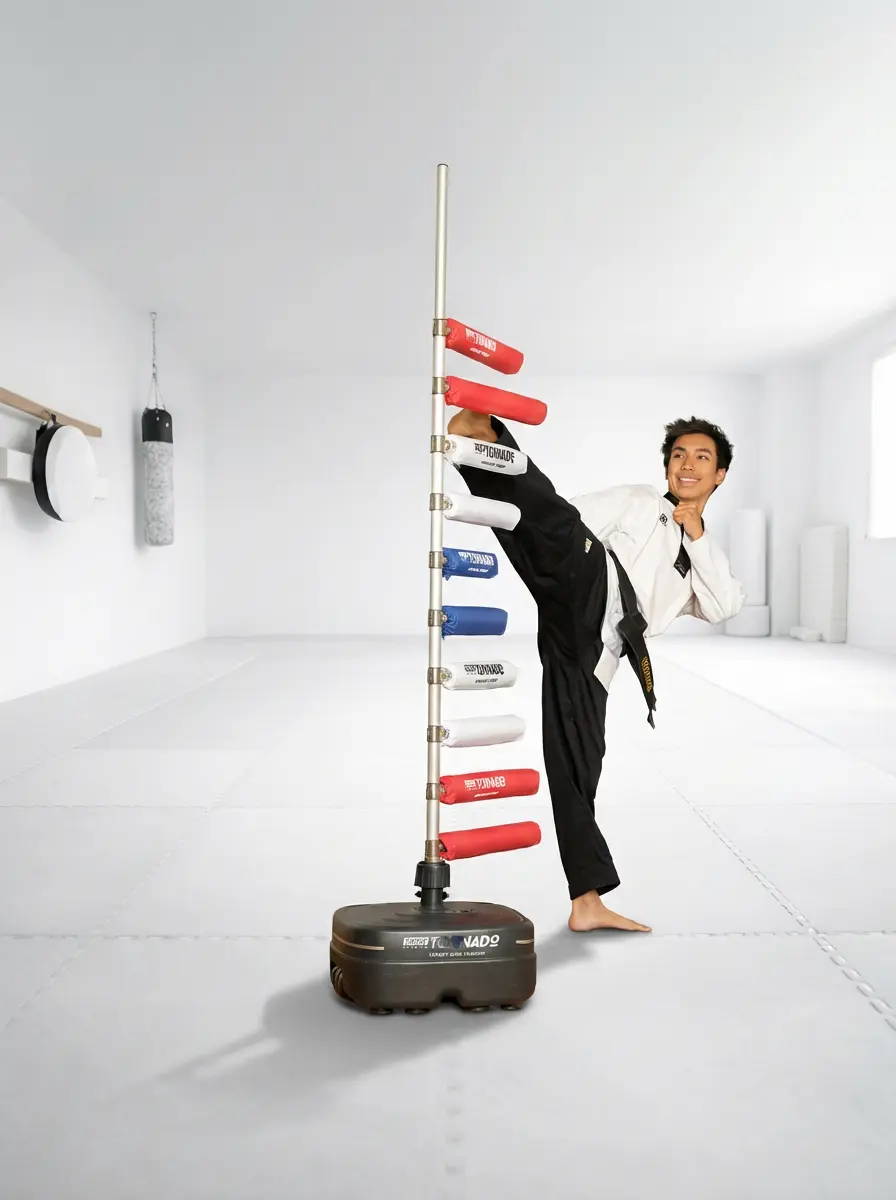
Improve Taekwondo Kicks

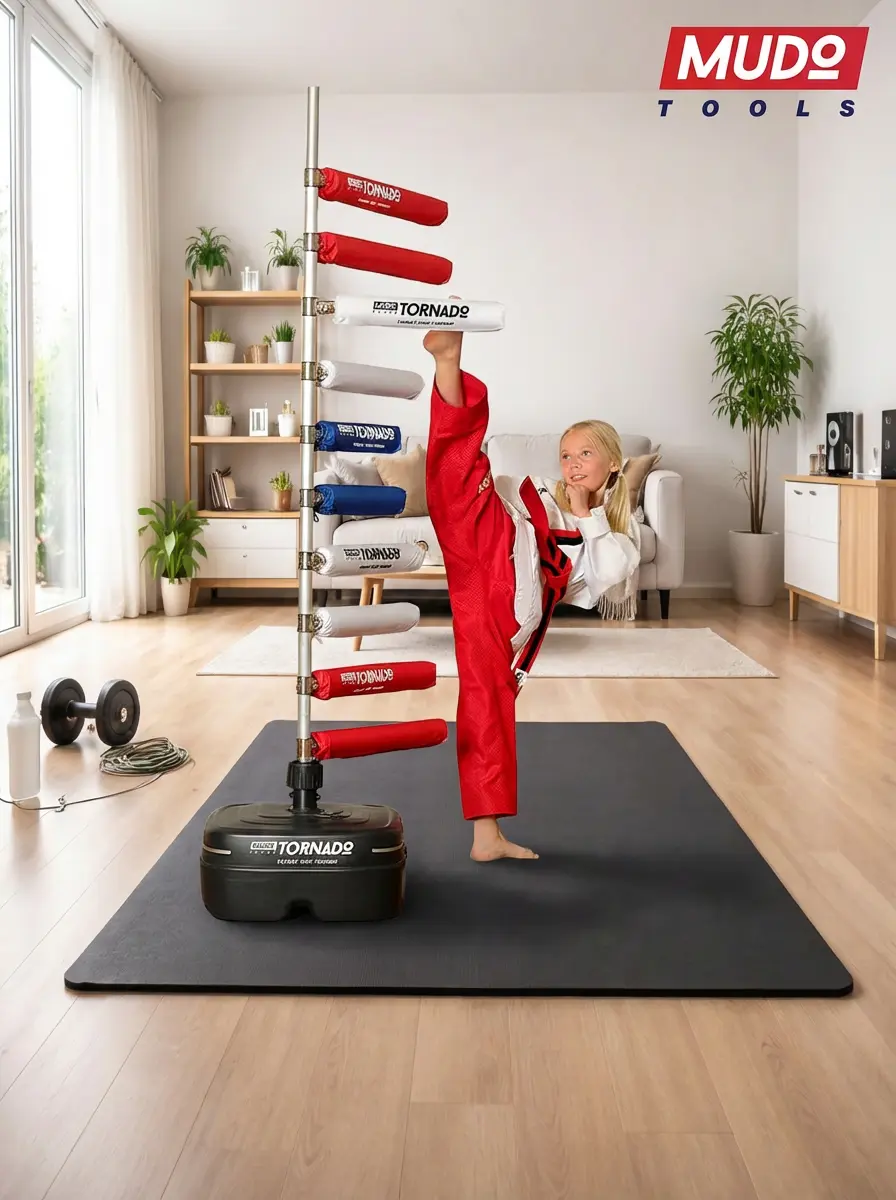
Child trains Taekwondo kick technique

Typical training mistakes

Many train at home motivated, but repeatedly make the same mistakes. The most common: kicks are simply executed „into thin air“ without a clear target. This leads to a lack of precision and control.

Another mistake is focusing too much on strength instead of technique. Fast and clean movements don't come from raw strength, but from clean execution and timing.

Missing structure is also a big problem. Without a clear training plan, people just train whatever comes to mind – often without real progress. Anyone who repeatedly practices the same kicks without variation will remain at the same level in the long run.

How to improve your training

To effectively improve your kick training at home, you primarily need structure. Divide your training into clear phases: warm-up, technique training, and combinations. This way, you ensure that each session is well-organized.

Pay special attention to clean execution. Practice movements consciously and with control before increasing speed or strength. Quality is more important than quantity.

Additionally, you should work with clear goals. Instead of just training, focus on individual strengths like balance, accuracy, or reaction.

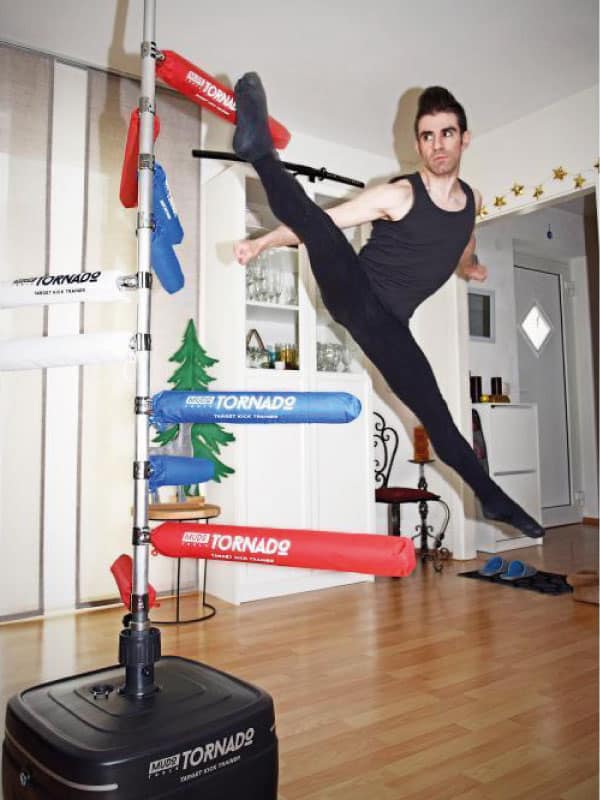
Training aids or moving targets are also helpful, as they provide direct feedback and make your training much more realistic.

Improve Taekwondo Kicks

Child trains Taekwondo kick technique

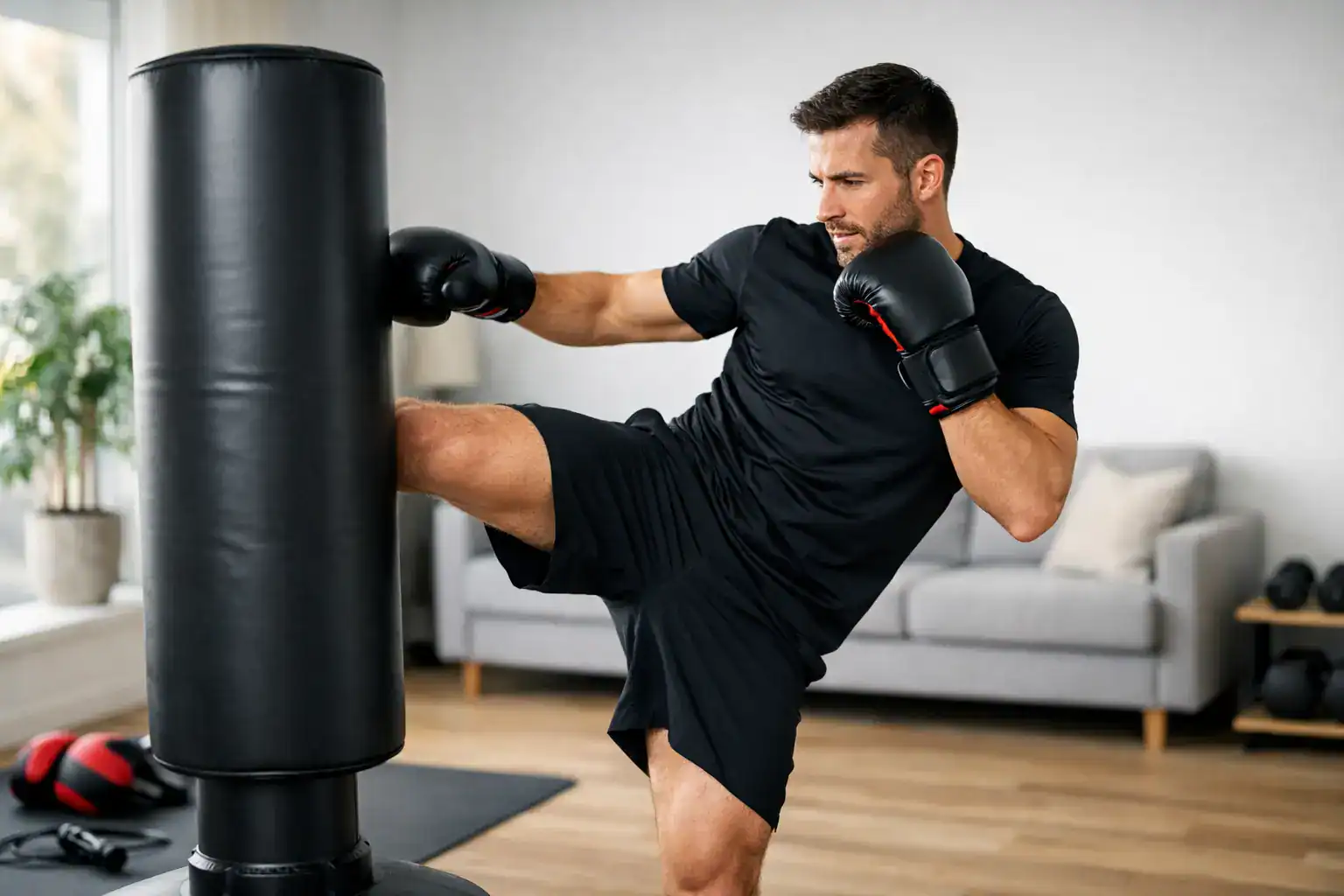
Home kickboxing training equipment

Home Kickboxing Training | Posts
April 24, 2026Anyone who wants to learn taekwondo kicks at home quickly realizes that a few high kicks in the air look like training, but are often of little technical benefit. Without clear sequences, clean distance and controlled repetition, mistakes creep in. This is exactly where it becomes clear whether home training is just exercise or whether it really improves your technique. Learning taekwondo kicks at home means more than just kicking In taekwondo, it's not the number of kicks that makes the difference, but their quality. A dollyo chagi with poor hip rotation, an ap chagi without a clean chamber or a yop chagi without a stable axis may look dynamic, but it loses precision, impact and control. This often becomes apparent later at home than in the dojang because there is no direct correction. That's why your training at home needs a clear priority. First comes technique, then speed, then height and only at the end hardness. Many people train the other way around and wonder why their kicks are fast but unclean. Control starts with technique. Nevertheless, the advantage of home training is huge. You can build up repetitions, consolidate movement patterns and work specifically on weaknesses without having to rely on gym time or training partners. Regular short sessions are often more effective than infrequent long sessions, especially for kicks that rely on timing and a sense of movement. Which kicks you should train at home first Not every kick is equally suitable for starting out in the living room, basement or home gym. If you are training at home, you should first choose the techniques that give you a stable base. These include Ap Chagi, Dollyo Chagi and Yop Chagi in particular. These three kicks cover key movement patterns: forward pressure, rotation and lateral stability. The Ap Chagi looks simple, but is technically more demanding than many people think. The decisive factors are the clean tightening of the knee, active foot tension and controlled retraction. If you work sloppily here, you will later make the same mistake in faster combinations. Dollyo Chagi is about more than just leg swing. The hips, standing foot and upper body must work together. If the stance foot doesn't turn in cleanly, you block your rotation and lose range. This sequence can be practiced very well in isolation at home because you can concentrate fully on the line of the kick. The Yop Chagi requires a higher level of balance and body tension. For many athletes, this is precisely why they avoid it. This is a mistake. It is particularly valuable at home because it shows you how stable your technique really is. If you bend sideways or don't align your hips properly, you'll notice it straight away. How to set up effective home training A good kicking workout at home doesn't have to be long. It has to be precise. Three sessions per week of 20 to 30 minutes each are often enough if the content is clearly defined. Rather than haphazardly throwing in ten kicks, train two techniques cleanly and with focus. Start with mobility for the hips, posterior chain and ankles. This is followed by slow technique runs without a focus on strength. The aim here is to consciously set the movement. Only when the line is right do you increase the speed. Finally, you work on series, reaction or accuracy. A simple structure works particularly well in practice. First 5 minutes of mobility and activation. Then 10 minutes of slow technique, for example Ap Chagi and Dollyo Chagi on both sides. Then 10 minutes of target-oriented kicking with clear repetitions. If there is still time, short combinations follow with a focus on retreating, covering and changing stance. Load control is important. Daily full-gas training does not make kicks better. It often just makes them less clean. The hips and lower back need a clean load and sufficient recovery, especially with fast turning movements. Technique grows through quality, not through blind wear and tear. Learning taekwondo kicks at home without a training partner The biggest bottleneck in home training is rarely motivation. It is feedback. Without a partner, trainer or claw, many athletes lack feedback on whether the distance, timing and point of impact are correct. This is precisely why aerial kicking alone remains limited in the long term. You need a target that allows you to kick realistically. Not just for hitting, but for precise repetition. Good training equipment doesn't help because it makes training more comfortable, but because it makes mistakes more visible. If you hit too low, too late or at the wrong angle, you will notice it straight away. This is worth its weight in gold in technique training. Classic sandbags have clear strengths, but also limitations. They are very forgiving, often promote hardness rather than clean lines and give you little feedback on timing or fluid follow-up techniques. This is not always enough for taekwondo, where quick changes of direction, precise striking surfaces and controlled returns are important. Modern kick trainers with a reset mechanism or rotating impact points create a different training experience. They make series more fluid, challenge your timing more and help you to not only hit kicks hard, but also technically clean. If you want to work seriously on precision at home, you will not save time, but detours. The most common mistakes when training at home A lot of progress doesn't fail due to a lack of talent, but due to small technical mistakes that become ingrained week after week. The most common is speeding up too early. As soon as kicks are executed quickly before the movement is stable, the focus shifts from the sequence to the impulse. This looks explosive, but worsens the technique. A second mistake is a lack of retreat. In taekwondo, a good kick does not end in a hit, but in a controlled return. If you drop your leg after the kick, you lose balance, cover and rhythm for the next action. At home, you should therefore train each repetition as if the follow-up movement were to follow immediately. In addition, the focus of training is often wrong. Many people work almost exclusively on height. High kicks are impressive, but without a stable base they are of little athletic value. A clean kick at medium height with a good line, tension and timing will get you further than ten unsafe headbutts in the air. Space is also often underestimated. If you train on a slippery floor, with a poor standing surface or between pieces of furniture, you unconsciously change your movement. The kick becomes more cautious, shorter or more tense. You don't need a huge room for serious home training, but you do need enough space for proper technique and a secure stance. How to measure progress If every repetition looks the same, you are training cleanly. If every tenth repetition looks significantly different, you lack control. Progress in kick training is therefore not only reflected in height or hardness, but also in repeatability. If you can technically perform the same kick ten times in a row, your quality will improve. Film individual sets with your smartphone. Not for show, but for analysis. Pay attention to the knee chamber, hip rotation, foot position, upper body posture and retraction. A video doesn't replace a trainer, but it takes away the illusion that a kick feels clean when it's not. Home training is even better when the equipment itself provides feedback. Systems that focus more on speed, reaction or clean target contact make progress more concrete. This not only motivates you, but also sharpens your focus. You don't just train more, you train more precisely. This is exactly where solutions like Mudotools come in, because they make technique training at home more controlled, dynamic and comprehensible. A realistic training plan for 4 weeks If you want to learn taekwondo kicks at home, a simple four-week block is often more effective than constant variety. Week 1 is all about basic technique. Slow repetitions, clear chamber, stable stance. In week 2, you increase the tempo slightly and add simple target work. In week 3, short combinations are added, such as Ap Chagi followed by Dollyo Chagi. In week 4, you train the same sequences under a little more time pressure. The point is not to do something completely new every week. The point is to be able to call up the same technique under better conditions. First clean, then fast, then fluid. If technique makes the difference, that's where training has to start. For advanced skiers, the same plan can become more demanding. Less basic technique, more series, more bilateralism, more focus on reaction changes. The opposite applies to beginners. Preferably fewer kicks, but better controlled. So it depends on your level, not some standard plan from the internet. Training at home is no substitute for good club training. But it is a great addition if you build it up properly. If you work regularly, in a controlled manner and with a clear goal, you will not only improve individual kicks, but also your overall sense of movement. And that's exactly what you'll feel later on the surface - in the distance, timing and confidence of every technique. [...] Read more...
April 8, 2026If you only hit kicks in the air at home, you are training movement. If you really take improving your kicking technique seriously, you train control, distance, timing and clean hit patterns. This is where work and progress separate. Why kickboxing technique training at home often stagnates The problem is rarely motivation. Most people fail due to the quality of their training. Without a partner, without a clear target image and without direct feedback, mistakes creep in: the hips open too early, the supporting leg doesn't turn in cleanly, the kick is pulled instead of snapped or the distance doesn't match when the kick is hit. This is often hardly noticeable on the punching bag. The bag is very forgiving, absorbs a lot of energy and gives you resistance, but hardly any precise feedback on the strike area, timing or return. This is useful for fitness. For clean technique training only to a limited extent. If technique makes the difference, you need a structure at home that makes movements measurable and repeatable. This is where kickboxing training at home becomes really effective. Kickboxing technique training at home needs three things Technique training also works without a training partner, but only if three factors work together: a clear technical goal, controlled repetitions and a training tool that not only enables contact but also promotes clean sequences. The first goal should never be „kick harder“. Specific tasks such as: Hitting a roundhouse with a stable axis, executing a front kick with a quick return or setting a side kick with a clean line. The second point is control. Good technique is achieved when the movement sequence remains stable. The third point is feedback. Classic tools such as claws are strong, but need a partner. A punching bag is available, but mainly trains hardness. For timing, precision and control, modern kick training equipment is often the better solution. How to build a meaningful unit 1. prepare movement patterns Start with footwork, mobility and controlled kicks. Don't exhaust yourself, but align yourself. 2. set a kick focus Train in clear blocks. If you keep changing, you won't get any depth. Structure is crucial. 3. sharpen timing and return Many kicks look good but then fall apart. This is where training separates from progress. Systems such as the Tornado training device help to train timing and return properly. 4. increase speed at the end Speed comes from clean mechanics. If you accelerate uncleanly, you train mistakes. This is where it becomes clear why good training is closely linked to reaction training in martial arts. Which mistakes slow down home training the most Unplanned volume, too much hardness, the wrong distance and a lack of feedback. Many people train a lot, but not specifically. Quality beats quantity. Which equipment is really useful at home The sandbag is good for hardness. It's more difficult for technique. If you train alone, you need solutions that combine movement and target. This is precisely why specialized systems such as Tornado Systems or the Speed Master make sense. They not only make training more intensive, but also more precise. The same is not true for beginners and advanced athletes Beginners need clear patterns. Advanced athletes need precision and timing. Both benefit from more structured training. How to recognize real progress Progress is not shown in exhaustion, but in control. Cleaner hits, more stable returns, better series. When specialized training solutions are worthwhile If you regularly train alone and notice that you are lacking feedback, the next step makes sense. Modern systems close precisely this gap - especially in comparison to classic equipment. In the end, what counts is not how spectacular your training looks, but how precisely you work. → Kick training device → Improve kicking technique → Kick training at home → Reaction training in martial arts [...] Read more...
April 6, 2026Anyone who trains alone will be familiar with the problem straight away: the kick may be powerful, but the timing, distance and hit pattern are often a matter of luck. This is exactly where it becomes clear whether kicking training at home without a partner only produces sweat or builds up real technique. When technique makes the difference, just kicking in the air is not enough. Why kick training at home without a partner often stagnates Many people train diligently at home, but not properly. They repeat roundhouse, front kick or side kick dozens of times without a clear goal and without direct feedback. This feels productive, but often only leads to limited progress. The body doesn't automatically memorize the best movement, but the most common one first. The biggest problem is a lack of feedback. A partner, a pad or a trainer immediately shows whether the distance, angle and timing are right. At home alone, this moment is missing. As a result, small mistakes creep in - turning the hips in too early, an unstable stance or a kick with too much distance and too little control. Then there's the monotony. Sandbag training can make you tough, but it is not automatically precise. If you only work against a fixed target, you rarely train reactive movements or fluid follow-up actions. In taekwondo in particular, it's not just hardness that counts, but clean technique, quick retraction and controlled transitions. What good home training really needs to achieve Effective kick training at home without a partner requires three things: a clear goal, repeatable movements and controllable feedback. Without this basis, training remains unfocused. A good setup at home doesn't have to be big, but it does have to make sense. You need a form of training that not only allows technique, but forces it. If you want to specifically improve your kicking technique, you need to be able to recognize whether kicks are clean, whether the movement comes back stable and whether rhythm is maintained. Air kicks improve agility. The sandbag strengthens toughness and stamina. However, both are only ideal to a limited extent for precise technique training with clear feedback. If you want to work on timing, accuracy and reaction, you need a system that supports movement instead of blocking it. How to structure your kick training at home without a partner Training alone works best with a clear structure. Don't train everything at the same time. If you want to improve precision, you shouldn't overload the same session with maximum strength, endurance and chaos combinations. 1. technique before speed Start with clean execution at a moderate pace. Work on individual kicks consciously: knee chamber, hips, impact area, retreat. Slow training is not easy - but it is honest. 2. set fixed hit targets Without a clear target, every kick becomes approximate. A defined point of impact immediately changes the quality of your movement. Distance, height and body line become cleaner. 3. series instead of random repetitions Train in blocks. For example, 5 series of 10 technically clean kicks per leg. This makes progress measurable and controllable. 4. integrate reaction and recovery A kick does not end on contact. The decisive factor is the return into position. If you don't reset cleanly, you lose time - in training and in the fight. Which tools really make sense at home It depends on what you want to improve. A punching bag is often enough for fitness. It's more difficult for technique. A punching bag is very forgiving. Punching bags are strong, but need a partner. This is precisely the weakness of home training. This is why specialized kick training equipment for home use is so effective. They provide a clear goal, promote fluid movement and bring structure to training. In particular, systems with movable targets - such as the Tornado training device - support timing, technique and flow of movement much better than fixed targets. Typical mistakes when training alone Too much intensity with too little control. Many people train hard but not properly. This provides motivation in the short term, but poor technique in the long term. The second mistake is a lack of progression. Repeating the same repetitions over and over again without adaptation brings little progress. The third mistake is setting the wrong goals. Quality beats quantity. A practical structure for 30 minutes at home Start with 5 minutes of mobilization. Then focus on one kick for 10 minutes. In the next block, series with a clear task. Finish with short intervals focusing on precision under fatigue. If you are still hitting cleanly at the end, you are training correctly. If you just keep going, you're training wrong. For whom modern home training is particularly worthwhile Beginners build clean basics. Advanced players improve specific weaknesses. Competitors gain additional quality in technique and timing. Trainers also benefit. Structured home exercises are more effective than random training. This is exactly where Mudotools comes in: with systems that not only enable kick training at home, but also make it much more precise. The difference is not in the location, but in the system Kicking training at home is not a stopgap solution. It is an advantage - if you train in a structured way. If you only collect repetitions, you collect volume. If you train with a goal, feedback and structure, you collect progress. The best next step is not to train harder - but more precisely. → Kick training device → Improve kicking technique → Improve Taekwondo kicks → Discover the Tornado training device [...] Read more...